January 25, 2012

"Why the long face?"

Libby Copeland writes in Slate on a study suggesting that voters aren't just looking for good-looking candidates, they favor a particular kind of good looks suggesting competence: 
What does competence look like? Working with subjects rating photos of hundreds of faces, Todorov and colleagues have developed computer models of how faces can suggest character traits like trustworthiness and likability. The competent face shape is masculine but approachable, with a square jaw, high cheekbones, and large eyes. When people say Romney just looks presidential, this is the image they’re summoning. 
Todorov and other psychologists believe that otherwise expressionless faces can appear to show emotion based on how they’re formed—the shape of the eyebrows can suggest anger, for instance, while a long distance between the eyes and the mouth can suggest sadness. On Todorov’s computer model of an incompetent face, beady, close-together eyes paired with high eyebrows suggest fearfulness, even through the face is expressionless. Todorov believes our tendency to read expression into neutral faces amounts to an “overgeneralization” of a healthy trait—human beings’ ability to judge others’ intentions from a brief glance.

I added the emphasis on the long distance between eyes and mouth connoting sadness because that's a standard in Byzantine iconography of Jesus Christ going back, oh, 1500 years. Spanish movie star Javier Bardem has a bit of that look to his face.

January 24, 2012

Democracy v. Diversity in the Muslim World

From my new column (link fixed) in Taki's Magazine:
If the Arab Spring is good for democracy, then it has to be good for diversity, right? We know that democracy and diversity are virtually the same thing: Both words begin with a “d,” end with a “y,” and by definition are good. Who isn’t aware that minority protection (indeed, minority promotion) is the essence of majority rule?

Read the whole thing there (link fixed).

Oscar nominations

A reasonable number of pretty good movies came out in 2011, but not too many really good ones. Here are links to my reviews in Taki's Magazine of Oscar nominated films in chronological order.

Rango -- Best Animated Feature. Gore Verbinski's reptilian Western is ugly but amazing. 

Bridesmaids: Best Original Screenplay for Kristen Wiig and Best Supporting Actress for Melissa McCarthy, who is very funny. It's good to see a non-Woody Allen comedy recognized in the overly serious Oscar nomination.

Midnight in Paris: Best Picture, Best Director, and Best Original Screenplay. For the first time in a long time, Woody Allen deserves his nominations for this slight but delightful comedy. 

The Tree of Life: Best Picture, Best Director (Terrence Malick), Best Cinematographer (Emmanuel Lubezki from Mexico who would be a deserving winner) -- I managed to miss the first 15 minutes due to traffic, so I enjoyed it a lot more than everybody else did. There's a beautiful 90 minute movie about growing up in Waco surrounded by a dull 45 IMAX film about the Big Bang. In my view, the Tree of Life glass is 90/135ths full, but others have been known to differ.

Jane Eyre -- Costume Design. Michael Fassbender, who was good in this as Mr. Rotchester and three other movies (X-Men, A Dangerous Method as Carl Jung, and Shame), didn't get any nominations this year.

Transformers -- Three technical nominations for a better than expected fighting robot movie. I had a good time at this film.

Harry Potter -- Three technical nominations for what was a disappointing end to an admirable franchise.

Rise of the Planet of the Apes -- Just a Visual Effects nomination, with Andy "Gollum" Serkis once again denied a Best Supporting Actor nod. What's the over-under year for when Serkis will get his Lifetime Achievement Award from the Academy: 2035?

Drive -- Just a sound editing nomination for a kind of cool movie. I think if they'd made the heroine into a femme fatale, it would have kicked it up the last notch, but hardly anybody makes femme fatale movies anymore. The dominant male audience disapproves of them.

Moneyball -- Best Picture (but not Best Director, so it won't win BP), Brad Pitt (I would have picked his performance in Tree of Life), Jonah Hill (who was excellent as the stat nerd), and, of course, a Best Adapted screenplay nomination for Sorkin and Zallian. Ranked on a degree of difficulty scale -- it's a baseball statistics movie -- this might be the most remarkable accomplishment of the year. On the other hand, it's a baseball statistics movie ...

The Ides of March -- An Adapted Screenplay nomination for the Democratic primary campaign movie, but kind of forgettable.

Margin Call -- J.C. Chandor's Wall Street movie got a Best Original Screenplay nomination: "Speak to me as if I were a young child or a Golden Retriever. It weren’t brains that got me here, you know that.” 

The Descendants -- A potential Best Picture winner, although it's not really that good. But it would be a decent placeholder Best Picture winner like last year's The King's Speech. In 2020, everybody will go around saying that the Academy was nuts to give the Oscar to The King's Speech because we all realize now that the most important movie of 2010 turned out to be ... But the problem is that we don't know what movie from 2010 will look like the real landmark in 2020. (And something else will seem better in 2030, and so forth.) In the mean time, though, while we're waiting, The King's Speech was a perfectly okay Best Picture winner. Similarly, Alexander Payne's The Descendants is a very nice movie, and would be a respectable Best Picture winner until everybody figures out what really should have won.

Hugo -- Led the pack with 11 nominations.

The Girl with the Dragon Tattoo -- A lot of technical nominations, but no Best Picture or Best Director nod for David Fincher, which seems about right. Maybe it will send Fincher the message not to waste his skills on junk like this.

The Iron Lady -- Meryl Streep as Margaret Thatcher

The iSteveier movies of 2011 -- Bad Teacher, X-Men: First Class, Rise of the Planet of the Apes, and The Guard -- didn't garner much Oscar love. It's clearly some kind of conspiracy.

In other news, the great Gary Oldman finally got himself an Oscar nomination.

"Hugo's" 11 Oscar nominations

I was underwhelmed by Martin Scorsese's 3D kids' (?) movie Hugo (here's my review from Taki's Magazine), but, boy, did sci-fi author Orson Scott Card really do a takedown on Hugo.
So the movie we were promised -- Hugo the orphan repairs a mechanical man to receive a message from his father -- turns into a movie we would never have paid to see: sad old forgotten movie director gets a round of applause. 
Only a movie director would think he could switch us from caring about an orphan whose father was burned to death, to caring about an old man who is depressed because his career collapsed. 
Dead father vs. career loss. Magical machines vs. endless self-pity. What idiot would choose to make the career-loss self-pity movie, when he has all the makings of the dead-father magical-machine movie?

Vibrancy

A reader sends me this from NBER:
Importing Corruption Culture from Overseas: Evidence from Corporate Tax Evasion in the United States 
by Jason M. DeBacker, Bradley T. Heim, Anh Tran  
Abstract: 
This paper studies how cultural norms and enforcement policies influence illicit corporate activities.  Using confidential IRS audit data, we show that corporations with owners from countries with higher corruption norms engage in higher amounts of tax evasion in the U.S. This effect is strong for small corporations and decreases as the size of the corporation increases.  In the mid-2000s, the United States implemented several enforcement measures which significantly increased tax compliance.  However, we find that these enforcement efforts were less effective in reducing tax evasion by corporations whose owners are from countries with higher corruption norms. This suggests that cultural norms can be a challenge to legal enforcement. 

January 23, 2012

Apple's textbook whiff

For a long time, Apple has been talking about revolutionizing textbooks with the iPad. The firm finally had its dog and pony show, but the whole thing turned out to be bizarrely retro: we can make learning fun by embedding animations in textbooks! 

Look, moving textbooks onto electronic tablet is a good idea in the long run, for two obvious reasons, neither of which Apple did enough to emphasize:

1. A single iPad weighs a lot less than a half-dozen massive modern textbooks. From 7th through 11th grades, I used to ride my bike to school, but my textbooks only weighed a few pounds back then. These days, there is only one kid in my neighborhood who rides a bike to school, and he has these elaborate saddle bags on either side of his rear wheel because that's the only way to keep his bike from being dangerously top-heavy.

2. A tablet also serves as a workbook providing immediate feedback. The program can even make the next problem easier or harder depending upon how you do on this one. Teachers won't have to grade homework because the computer system does it for them. For math an iPad might be even better than a laptop with a keyboard because it's a lot easier to do math problems with pencil and paper than with a keyboard.

At present, tablets are still kind of expensive, but the future for them looks pretty clear, although my guess is that the future will be a clamshell even thinner than a Macbook Air, with a touchscreen and a sophisticated set of hinges that lets you use it in either tablet or laptop mode.

Dog v. Tail

The NYT's top story tonight is:
Backer Pumps $5 Million Into Pro-Gingrich ‘Super PAC’ 
By NICHOLAS CONFESSORE42 minutes ago 
The Gingrich campaign got a significant influx of cash from the wife of Sheldon Adelson, a billionaire casino owner who contributed $5 million to the campaign earlier this month.

One interesting trend is that that these heavy hitter mega-donors like Dr. Miriam Adelson and Haim Saban, a major Democratic contributor, are often dual-citizens who are also big players in Israeli politics. The Adelsons, for example, started a newspaper in Israel that is given away for free to promote Likud. It's now the biggest newspaper in Israel.

I don't pay much attention to Israeli politics because I am not an Israeli, but it sounds pretty fascinating, more exciting than American politics. I wonder if the Adelsons see supporting Netanyahu as being good for Gingrich or whether, for them, it's more that getting Newt elected President would seem good for Bibi. (Personally, I find Bibi more impressive than Newt, but I don't know how the Adelsons feel.)

Clausewitz said that war is the continuation of politics by other means, but increasingly American politics resembles Israeli politics continued by other means. It would be interesting to ask the Adelsons which country, in their view, is the dog and which is the tail. 

Who knew?

Maureen Dowd writes in the NYT about how the Cool Black President she thought we were electing turned out to be less entertaining than she had expected from all those years watching Cool Black Guys on TV:
FOR eight seconds, we saw the president we had craved for three years: cool, joyous, funny, connected. 
“I, I’m so in love with you,” Barack Obama crooned to a thrilled crowd at a fund-raiser at the Apollo in Harlem on Thursday night, doing a seductive imitation as Al Green himself looked on. ... 
The portrait of the first couple in Jodi Kantor’s new book, “The Obamas,” bristles with aggrievement and the rational president’s disdain for the irrational nature of politics, the press and Republicans. Despite what his rivals say, the president and the first lady do believe in American exceptionalism — their own, and they feel overassaulted and underappreciated. 
We disappointed them. 
As Michelle said to Oprah in an interview she did with the president last May: “I always told the voters, the question isn’t whether Barack Obama is ready to be president. The question is whether we’re ready. And that continues to be the question we have to ask ourselves.” 
They still believed, as their friend Valerie Jarrett once said, that Obama was “just too talented to do what ordinary people do.” 
Who knew, in the exuberance of 2008, that America was electing an introvert? 

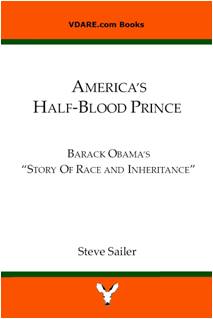
Who knew? How could anyone possibly know? I mean, besides the presidential candidate having published at age 33 a 150,000 word autobiography that is introverted, elegant, dull, egotistical, self-pitying, not particularly insightful, and a little depressing: Obama's Presidency in convenient book form? But other than this whopping huge memoir, how could anyone have known anything about the man? And who could expect busy media figures like Maureen Dowd to read a Presidential candidate's well-written autobiography? Or even its subtitle?
Kantor writes that the Obamas, feeling misunderstood, burrowed into “self-imposed exile” — a “bubble within the bubble” — with their small circle of Chicago friends, who reinforced the idea that “the American public just did not appreciate their exceptional leader.” 
She reports that Marty Nesbitt indignantly told his fellow Obama pal Eric Whitaker that the president “could get 70 or 80 percent of the vote anywhere but the U.S.”

Redmond v. Palo Alto over Yale v. Jail

The lifestyles of the rich and famous of Silicon Valley span the dimensions from Larry Ellison-style Living Large to those who like a quiet upper middle class suburban existence (private jets not necessarily excluded). For example, Steve Jobs was too persnickety to get around to ever building the Japanese minimalist dream house he had planned, so his wife just moved him and the kids into the old part of Palo Alto, which is mostly a lot of nice two story houses on fairly small lots. Others in the neighborhood include Larry Page of Google and venture capitalist John Doerr. Mark Zuckerberg of Facebook recently traded up from a 3k square foot to a 4k sf house around the corner.

All this is just an intro to say that people in Palo Alto tend to be a little less clueless than elsewhere.

On the other hand, Bill Gates lives in a 66,000 square foot house in the Seattle area. And one of the Gates Foundations' obsessions has been to get all the public high schools in California to require that all students to graduate must pass all the courses (known as the "A-G Requirements") necessary for admission to a University of California college, even though, by law, UC schools are for the top 1/8th of California's high school graduates. This is classic "Yale or Jail" thinking by the Gates Foundation: We'll force every student in California to be eligible for the elite UC system by threatening them that if they don't pass all the A-G requirements, they'll go through life as high school dropouts! What could possibly go wrong?

Most places, the educational bureaucracy is made up of people who are better with words than numbers, so if the Gates Foundation tells them to do it, they think it must be a great idea and announce that all the new 9th graders can't get a diploma without passing Algebra II. Later on, the high school math teachers quietly convince the administrations to postpone implementing this until next year. In a lot of places, it's been quietly postponed for many years in a row. The LA school board, for instance, passed an Algebra II requirement in 2005 at Gates' behest, but has yet to enforce it. But Come the Revolution, comrades, we'll all eat strawberries and like them.

Palo Alto, in contrast, is one of the few places where the math teachers have the confidence to say that the Gates Foundation plan is stupid.

So, this Redmond v. Palo Alto angle makes this Achievement Gap story from Palo Alto High School interesting. From the San Jose Mercury-News:
Palo Alto math teachers oppose higher math graduation requirements
By Sharon Noguchi snoguchi@mercurynews.com 
Against the resolute push for higher academic standards geared toward preparing students for college, the Palo Alto High School math department has drawn a line in the sand. 
Don't prepare all students for University of California entrance, the math faculty argues, because not all students can master quadratic equations and logarithmic functions. 
Their counterpush against raising graduation standards to include Algebra II has angered educators and parents who believe schools, including districts like Palo Alto with strong college-going cultures, are failing poor and minority students by expecting too little of them. 
The parents point to startling statistics: In the Palo Alto and Gunn high schools' 2011 class of seniors, only 15 percent of African-Americans and 40 percent of Latinos completed the prerequisites for the University of California and California State University with a C or better. That compares with 79.5 percent districtwide meeting those so-called A-G requirements. 

The A-G requirements includes two years of a foreign language (increasingly only Spanish is on offer in California), which is hard on African-American youths because foreign language courses are hard in general, and blacks have so little interest in Spanish. And it demands Algebra, Geometry, and Algebra II, which is a great idea for Lake Wobegon H.S., but Algebra II is a big hurdle for the 49.99% of young people who are below average in intelligence.
"It is disgraceful," said Kim Bomar, a parent of two Palo Alto elementary children, "in this district where some kids are doing so extremely well and the resources are so extremely rich." 
Other districts, including San Jose Unified, East Side Union and San Francisco Unified, set A-G as the default curriculum, and in Palo Alto the administration had recommended the district follow suit. The school board is set to take up the issue in the spring. But Palo Alto High's math teachers oppose the recommendation. Yes, bump up the graduation requirement to three years of math, they argue, but don't require students to master Algebra II -- because they say not everyone can. ... 
Palo Alto High math department chair Radu Toma said critics confuse standards with achievement. "They make the assumption just by setting the bar up there, the bar will be reached," he said. "I'm not saying it's impossible; it's a big gamble."
The risk, he said, is that courses will be devaluated. 

Mr. Toma grew up in Communist Romania, so he's heard enough Grand Plans for one lifetime.
He said other districts' A-G standards aren't examples to follow. In San Jose Unified, which has had required A-G courses for 10 years, only 42 percent of seniors -- compared with Palo Alto's 80 percent -- last year completed them with a C or better, as UC requires. Students who aren't on track to complete the requirement may take different courses, spokeswoman Karen Fuqua said. 
Toma said that while students elsewhere may pass Algebra II, 45 percent of CSU and UC students must take remedial math. That doesn't happen with Palo Alto graduates, he said. "When our kids finish with Algebra II, we are not pretending they completed Algebra II." Teachers, he said, are doing everything possible to support students in achieving their personal best in math. 
The brouhaha escalated last fall, with the circulation of a letter signed by all but one of the math department's teachers, arguing against adoption of the A-G standards. "Diluting the standards in our regular lane to basic benchmarks, which might allow every student to pass Algebra II, would end up hurting the district's reputation and, implicitly, all of our students." 
The letter also took a swipe at students who fail: "Most of our students are fortunate to come from families where education matters and parents have the means and will to support and guide their children in tandem with us, their teachers. Not all of them." 
On Sunday, Toma said, "I am sorry that a couple of paragraphs in our letter that were quoted out of context led some community members who do not know our department, our program and our results, to doubt our commitment to all our students," Toma said. 
Toma said last week that he did not mean to insult families, and said he believes all parents care about their children's success. 
The letter provoked outrage. "It was unacceptable. It was racially insensitive," said Tremaine Kirkman, president of the Student Equity Action Network at Palo Alto High. His group provides tutoring and helps with college applications. In Palo Alto, he said, "no matter how well you understand math, it's such a fast pace you need a tutor to survive." 
On the first day of calculus, he said his teacher told the class: "There's no way to switch down a lane; if you can't keep up, you have to get a tutor." Palo Alto high schools have five lanes of math. 
In light of the math department's opposition, the Palo Alto school board postponed a decision on A-G. Emmett D. Carson, president of the Silicon Valley Community Foundation, called the delay "disheartening" and suggested the board risks damaging students' chances in life. 
The larger problem, Kirkman said, is that Palo Alto schools track some students early on toward failure, including placing a disproportionate number of black and Latino children into special education. 
Toma said the department would support adding another year of math -- geometry -- to Palo Alto's graduation requirement. In the San Mateo Union High School District, which requires three years of math, 68 percent completed it last year, Curriculum Director Cynthia Clark said. 
That is doable, Toma said; adding Algebra II isn't. "The educational system in our country is littered with grandiose initiatives or policies that failed because the bar was set unrealistically high," he said. "Making this huge jump is not going to better our kids' math education."

Lazy HBDers

Chuck at Occidentalist has been blogging up a storm lately of statistical analyses on various interesting questions. He vents:
What really frustrates me is Lazy HBD. There are dozens of public use data sets waiting to be explored from a HBD perspective. Statistical packages can be downloaded for free. All sorts of HBDish questions can be addressed: Do 2nd generation Blacks do worse on cognitive tests than 3rd+ generation Blacks? Do mixed White and Asians outperform Whites? What is the standardized difference between first, second, and third generation Hispanics controlling for SES? Does color correlate with IQ in the Hispanic population? Does color correlate with crime in the Black population? But it seems that few are interested. I don’t get it.

I'd get right on it, but I have to take a nap first. 

Seriously, there truly is a huge amount of data out there. Various longitudinal studies have been going on for decades that follow thousands of individuals throughout their lives. The 1979 National Longitudinal Study of Youth is the most famous because Herrnstein and Murray made it the centerpiece of The Bell Curve. But there are many other ones. 

Of course, it's a lot of work to do it right, as Chuck's wrestle through multiple blog posts with the old question of whether light-skinned blacks score higher on IQ tests than do dark-skinned blacks. Richard E. Nisbett argued that the lack of a correlation falsifies the theory that racial gaps in IQ are partly genetic. But the answer Chuck came up with appears to be ultimately yes there is a correlation, although it's not enormous. But as Chuck's work showed, there are a fair number of wrinkles that must be dealt with. 

Meanwhile, Inductivist looks at the Add Health questionnaire data to see if respondents overrate their own intelligence versus their scores on the survey's vocabulary tests:
First, people do have a tendency to rate their intelligence correctly--self-described intelligence is positively correlated with measured IQ--but the tendency is only moderate. Next, males are not more likely than females to inflate their smarts. By contrast, blacks are significantly more likely to--compared to whites. The other racial/ethnics groups do not differ from whites. 

January 22, 2012

To which GOP candidates does the Smart Money lean?

Audacious Epigone looks through the federal campaign contribution database to find out whom individuals identifying their occupations as "lobbyist" have donated to:

Presidential candidateLobbyist $
1. Rick Perry$25,500
2. Tim Pawlenty$11,770
3. Newt Gingrich$11,500
4. Mitt Romney$8,000
5. Rick Santorum$3,000
6. Herman Cain$2,500
7. Barack Obama$1,150
8. Jon Hunstman$500
9. Michelle Bachmann$250
10. Charles "Buddy" Roemer$100

So, the smart money, the professional insiders whose stock in trade is knowing which way the political winds are blowing, have invested most heavily in Rick Perry and longtime iSteve favorite T-Paw. Heckuva job, lobbyists!

By the way, is it too late for Mitch Daniels to jump in? I've got another anecdote about the famously sensible Indiana governor's lifelong love affair with drugs that I haven't used yet, and it would be a shame to have to wait until the next Presidential Timber rounds in 2015.

January 21, 2012

3 states, 3 winners: Why is that so bad?

So, Santorum won Iowa, Romney New Hampshire, and Gingrich South Carolina, with Paul hanging in there in all three. In other words, Republican voters haven't made up their minds yet, and why is that so intolerable? 47 states haven't had a say yet and the election isn't for almost 300 more days. 

There's such a market for media prognostications in election campaigns (Perry Is Obviously Unbeatable! Romney Has the Big Mo!) that there is always a lot of irritation when voters in the first few states don't wrap things all up. But why shouldn't primary campaigns go on for months and months like the Democrats in 2008?

Does it really do a party good to have momentum run away with the decision in the winter? For example, John F. Kerry's sudden emergence as the Inevitable victor in the winter of 2004 didn't do the Democrats any good. For about three weeks he appeared to be Mr. Unstoppable, but after that he just turned out to be as big a stiff as he'd been before his hot spell. John McCain fluked his way into the nomination by February 5, 2008 by winning narrowly in some winner-take-all states, and then just got older for the next nine months. 

The reforms that we really need are ones that would let new candidates get onto all future primary ballots after the first few states are done with. All we've learned so far is what we knew at this point in 2008: Romney seems like the most plausible President among the current contenders, but he doesn't inspire many people.

In this Computer Age, there's no reason that we need the huge lead times that dominate the current nominating process. The party that re-engineers the nominating process to be longer and more flexible, and thus more dramatic, would gain a modest advantage. In Presidential politics, nothing besides the economy, war, and whether or not the public is kind of sick of your party moves the needle much. But I could well imagine that the party that comes up with a primary process that climaxes in June rather than January on average might average a percentage point better in November over the long run.

Latest discrimination crisis

I have this vague impression that Saturday is the day when the New York Times dumps its discrimination stories -- you know, the kind of clueless stuff that I love pointing out the logical holes in. For example, this Saturday, the NYT headlines: 
Blacks Face Bias in Bankruptcy, Study Suggests

Maybe my cynicism has got the best of me, but I wouldn't be hugely surprised to learn that the New York Times has some kind of formal or informal quota about the number of stories it feels it must run weekly about the scourge of racism, but that its editors also feel that NYT readers are increasingly cynical and bored about scandals involving purported discrimination (unless you are some weirdo like me who finds that discrimination stories offer insights into how the world actually works). So, perhaps the editors tend to dump their Sailer-bait stories on Saturday, which is by far the least important day of the week in the newspaper business.

What about this new study that shows that, all across the country, relative to everybody else who goes bankrupt, blacks who go bankrupt are more likely to file for the more onerous Chapter 13 bankruptcy than the Chapter 7 bankruptcy? Why this disparate impact discrimination?

Eventually, the article gets around to reporting -- but, of course, not explaining -- a few informative facts:
Even though the attorneys’ fees for the more labor-intensive Chapter 13 are more than double the charge for a Chapter 7, some truly distressed debtors will pursue a Chapter 13 anyway, several bankruptcy experts said. That is because they can pay the fee over time, unlike in a Chapter 7, which typically requires a payment before the case is filed. If blacks are perceived as less likely to have the resources — or a family with resources — to come up with a lump sum, some lawyers may be inclined to suggest a Chapter 13, these experts suggested.

The mention that attorneys' fees are more than double for Chapter 13 raises the awkward question that never comes up in the article: Are blacks' attorneys more likely to be black? It's like that awkward question about the high rates of defaults by minorities on mortgages: How did the racial makeup of the mortgage brokers who sold mortgages that went belly up to Hispanics differ from the norm? 

So, why would lawyers tend to perceive blacks "as less likely to have the resources -- of a family with resources -- to come up with a lump sum"? How in the world did this stereotype of blacks tending to be poorer than whites get started, anyway? 

In general, A) the people who wind up in bankruptcy are poorer decisionmakers. B) Blacks wind up in bankruptcy at a higher rate. Therefore, it's hardly surprising that black bankruptees tend to be worse decisionmakers in bankruptcy than other bankruptees.

The most interesting thing about this data is actually that bankrupt Hispanics have the lowest rate of filing Chapter 13. Perhaps Hispanics have more extended family support in coming up with the lump sum, or perhaps the ones who would be likely to file Chapter 13 just take off for South of the Border. 

Do the French still believe in Freud?

Every culture is crazy in its own way. As I've gotten older, I've come to assume that the Cheese-Eating Surrender Monkeys tend to know what they are doing even if it doesn't make sense to us Americans. But the French continuing to blame autism on "refrigerator mothers" is hard to reconcile with my late-in-life Francophilia:

From the NYT:
“Le Mur,” or “The Wall,” a small documentary film about autism released online last year, might normally not have attracted much attention. 
But an effort by French psychoanalysts to keep it from public eyes has helped to make it into a minor cause and shone a spotlight on the way children in France are treated for mental health problems. 
The documentary, the first film by Sophie Robert, follows two autistic boys: Guillaume, who has been treated with the behavioral, or “American,” approach; and Julien, who has been kept in an asylum for six years and treated with psychoanalysis. Guillaume, though challenged, is functioning at a high level in school. Julien is essentially silent, locked out of society. ... 
Ms. Robert said the version of psychoanalysis that is most prevalent in France, particularly the post-Freudian school championed by Jacques Lacan, takes it as a given that autism and other mental health problems are caused by children’s relationship with their mothers, or by “maternal madness.” 
“Sometimes, when the mother is depressed, in utero, I mean when she is pregnant or at birth, sometimes the child can be autistic,” an analyst tells the camera in one scene. Another explains that autistic children “are sick of language — autism is a way of defending themselves from language.” 
To the question of what an autistic child can expect to gain from psychoanalysis, yet another analyst responds, “The pleasure of taking interest in a soap bubble. I can’t answer anything else.”

I'm not hugely optimistic about the efficacy of the "American" approaches, but the good news is that they at least tend to be more motivated by attempts to find something to help the children than to keep elderly acolytes of a defunct dogma employed. Aged Freudians guilt-tripping the moms of autistic kids doesn't do anybody any good, except keeping the old shrinks from realizing they've wasted their lives.

By the way, Lacan was born into a conservative Catholic family, Jesuit-educated, and, as a youth, a far rightist. 

January 20, 2012

Demonizing schoolteachers

Commenter Maya comes up with a pretty good analogy:
The truly smart people aren't staying away [from teaching] because of the money. The pay is decent enough for a job that is meant to be emotionally/spiritually rewarding and with ample vacation time. The truly smart are too smart to get into a situation where YOU [the media and the public] blame, demonize and threaten them for the severe shortcomings of other people. Smart people would rather become dentists, for example. A dentist doesn't get blamed for his patients' cavities nor is it ever suggested that a man getting his teeth broken in a bar fight is his dentist's fault.

Of course, dentists really can fill cavities, but teachers can't actually make everybody equally smart so that, as the federal law demands, no child is left behind.

Cuba: A view from Canada

One to two centuries ago, from the Monroe Doctrine at least through the Smedley Butler era of pushing around banana republics, American foreign policy was deeply concerned with Latin America. These days, Latin America is seldom front-page news, unless people are trying to get worked up over Hugo Chavez. 

The most obvious opportunity for advancing American interests would be in de-Communizing Cuba. Cuba is a remarkable piece of land, a long thin island with 2100 miles of coastline, much of it climatically moderated by sea breezes (a little bit like Hawaii, although not quite as perfect). And the place is just ridiculously poor in dollar terms due to Communism: in 2008, the average monthly salary was $16. Not until Raul Castro came to power were the sale of microwave ovens legalized!

I suggested in 2008 that President Bush consider that Cuban-American relations, like Chinese-American relations in the Nixon era were improved by ping-pong diplomacy, might be rife for some baseball diplomacy. In 2011 I suggested President Obama consider golf diplomacy, since the island will someday be the next great home of seaside golf courses. 

I brought this up in my recent post on the Washington Post's attempt to smear the super-establishmentarian Center for American Progress as anti-Semitic. Not surprisingly, hardly anybody mentioned it because who cares anymore about America's foreign policy relations with countries not more than 90 miles away when we call all obsess over countries six thousand miles away? 

But, one commenter called Canadian Observer took an aesthetic objection to America helping Cubans not be so incredibly poor anymore:
Steve... you really want to Americanize and de-Castroize Cuba? Turn that unique gem of an island into just another Caribbean sell-out tourist hot-spot rife with American strip malls and ESPN blaring from every single neighbourhood bar? Do we really have to change every single place on earth so that it satisfies the pedantic tastes of the gringo?  
Cuba is unique in that it is the only civilized place on earth where the pervading force of Americanization and Walmartization is almost non-existent.  
Leave it alone, I say. People forget that behind the ideology, Castro became popular with the educated and lower classes because he kicked out the American interests which had been turning Cuba throughout the 1920's, 1930's and 1940's into a nation of dancers, entertainers and hookers.

He does have a point. But, judging from the small bits of modern Cuba I've seen in movies over the last decade, there's an even greater irony here. Castro's Cuba is something of a time capsule of mid-Century America. As I wrote in a review of the 2004 movie-in-verse, Yes by doctrinaire English leftist Sally Potter: "Ironically, Cuba turns out, due to Castro's stultifying tyranny, to look like a well-preserved slice of the Eisenhower Era, full of '57 Chevies and Hemingway-worshipers." If Raymond Chandler, Robert Heinlein, James M. Cain, and Mickey Spillane decided to come back to life for one day in 2012 to take a taxi to a bar for a couple of drinks, they might well choose Havana as the place that most reminds them visually of the good old days.

Are schoolteachers as dumb as education majors?

It's well known that education majors in college have some of the lowest SAT / ACT scores of any major. The Education Realist blog points out, however, that a large fraction of those dumb ed majors fail to graduate, and that to become a public school teacher you not only have to have a college degree but then, usually, pass some kind of licensing exam, which can range from easy to rather hard for calculus teachers.

So, the people who make it through both college and then pass their subject area test tend to have higher SAT scores than the average Ed major. An ETS study of those who passed the licensing test in 20 states shows that, yes, gym teachers aren't all that intellectual, averaging about 960 on a 400 to 1600 scale. Elementary school teachers average a little over 500 on both Math and Verbal. High school teachers tend to be sharper, with math teachers averaging just under 600 on Math. Here's a graph from ETS of SAT scores for each subject area.

Overall, public school teachers are pretty average for college graduates. It looks like they average about a quarter of a standard deviation lower on college admission tests than do average college graduates. But then college graduates are above average. With the exception of high school math teachers, teachers tend to score higher on the Verbal / Critical Reading section than on the Math section. That's their job: to use words to explain stuff. But it also explains why they have trouble dealing with the flood of data that's been incoming in recent years: thinking about statistics isn't their strong suit.

My guess is that smarter teachers would probably be a good thing, so we ought to be thinking about ways to make the job of teaching more attractive to smart people. In general, smart people don't like dealing with knuckleheads, so forcing teachers to carry most of the burden of discipline, a growing trend in recent decades, is a good way to keep smart people out of the business. You can instead use some of those gym teachers to run after school detentions instead of delegating most of the disciplining down to the teachers as happens in so many public schools desperate to avoid disparate impact lawsuits by not generating a paper trail of discipline actions carried out by the administration.

Of course, the Obama Administration is actively working to make teaching a less attractive profession to people who like thinking about The Great Gatsby via their sweeping investigations into the mystery of why black students get suspended relatively more often than other races. Thinking statistically is not the Obama Admin ed experts' strong suit either, evidently. 

January 19, 2012

How it works

From the Washington Post, a news story (i.e., not an opinion piece) by reporter Peter Wallsten:
Obama-linked group accused of anti-Semitism 
The Center for American Progress, a liberal think tank closely aligned with the White House, is embroiled in a dispute with several major Jewish organizations over statements on Israel and charges that some center staffers have used anti-Semitic language to attack pro-Israel Americans. 
The controversy reflects growing divisions among important allies of President Obama over Middle East policy that could complicate the president’s reelection outreach to some Jewish voters, just as he is seeking to assure them of his commitment to Israel’s security amid fears of an Iran nuclear threat. 
Among the points of contention are several Twitter posts by one CAP writer on his personal account referring to “Israel-firsters.” Some experts say the phrase has its roots in the anti-Semitic charge that American Jews are more loyal to a foreign country. In another case, a second staffer described a U.S. senator as showing more fealty to the prime U.S. pro-Israel lobby, the American Israel Public Affairs Committee, than to his own constituents, replacing a standard identifier of party affiliation and state with “R-AIPAC” on his personal Twitter account. The first writer has since left the staff. 
Critics are also pointing to writings on the CAP Web site, where staffers have suggested the pro-Israel lobby is pushing the U.S. toward war with Iran and likened Israel’s treatment of Palestinians in Gaza to the policies of the segregated American South. 
Those statements, among others, have gained notice largely because of CAP’s influential role in Obama’s Washington. Founded and chaired by John Podesta, a onetime chief of staff in the Clinton White House, the center is an idea generator for the administration and a source for many of its top officials.

So, CAP is a totally mainstream group run by veteran Democratic insiders. Here's Glenn Greenwald of Salon [link fixed] on how the tarring and feathering is organized. 

Being Democratic Establishment Central, CAP will survive, no doubt, but the "chilling effect" of being accused of anti-Semitism in the news columns of the Washington Post will remain as a reminder. If you are a Democratic underling, don't even think amusing thoughts about Republican senators who have sold out to AIPAC. In a moment of weakness, you might put them on Twitter. You can't be too careful.

At present, the Israel Lobby is likely to run into more resistance to this kind of smear than at other times. Right now, Israel has a right of center government that Republicans tend to feel more affectionate toward, whereas most American Jews are Democrats. This kind of disalignment tends to generate some healthy debate among Jews.  

Years ago, I proposed that the Israel Lobby should be treated like the anti-Castro Lobby: as a big, powerful interest group that normally gets much of its way on the foreign policy questions it's interested in precisely because it's a big, powerful lobby. That's politics, and both the anti-Castro Lobby and the Israel Lobby play politics well.

In the abstract, I'd probably want the U.S. to explore a deal with the Cuban government to lift sanctions in return for major Cuban concessions (Cuba is so needlessly poor after 50 years of Communism that there's a big win-win deal possible to de-Communize Cuba that would make a lot of money for Americans and for Cubans: here are some details of how to get the ball rolling to a de-Communized Cuba), but I recognize the power of the Cuba Libre lobby and I understand their motivations, so it's not a big deal for me. I'm likely more sympathetic to Israel in its dispute with the Palestinians than I am to the Cuba Libre lobby and I understand the Israel Lobby's power, so I don't care much at all about Israel pushing the Palestinians around.

What I do care about is the liberty and quality of debate in the U.S.

The difference between the Israel and the Cuba lobby is that the Cuba Libre Lobby is happy when you mention out loud how powerful they are, because that makes them seem even more powerful. 

In contrast, the Israel Lobby, although it boasts itself about its own power (just check out the annual AIPAC conference in D.C.) tries to destroy people who mention its power, or who might even someday get around to mentioning it, as long as the Israel Lobby isn't comfortable with them. "Pay no attention to that lobby behind the curtain!" The latter has a severely chilling effect on thought in the more careerist parts of America.

If we think of the Free Cuba lobby as a normal lobby, like the NRA or the NEA or the Armenians or the Turks or Big Pharma or whatever, lobbies that are often successful but are subject to the give and take of debate, then the goal should be for the Israel Lobby to be a normal lobby that wants everybody to talk about how powerful it is, instead of this force that tries, with some success, to control who can mention its very existence.