March 7, 2013

Best of MicroAggressions.com

Highlights from MicroAggressions.com:
I noticed that when I eat out and order a Coke, I’m often asked whether I want it to be a diet Coke. I asked some male friends about this and they told me it never happens to them.

24, female-bodied, in a relationship – so Facebook shows me ads with babies, wedding dresses, and engagement rings. Change gender on Facebook to male – suddenly I get ads pertaining to things I actually care about.

“I don’t date bisexuals. They’re never faithful.” 
Said to me by woman who identifies as lesbian.

Often when I have dinner at people’s houses, they ask me if I would prefer chopsticks, regardless of the meal!

“You can do [x]. It’s not that hard.” 
I have an invisible physical disability. I hear this from teachers, friends, and parents when I try to tell them about my ability level. 

Being called “hearing impared,” instead of deaf or hard of hearing. 
The term “hearing impaired” seems silly to be upset over, but when used over and over to describe you, you begin to believe that you are indeed broken instead of just different. I fight against the use of this word everyday.

"Push like a man!"
One man to another while trying to load a delivery cart in Manhattan. 

My daughter is a college freshman three states away from home. She’s having some depression so went to college counseling office this week at my insistence. The counselor asked if she belonged to any clubs and she mentioned the gay-straight alliance. He replied by asking “Are you having trouble adjusting because you’ve been rejected by your fellow lesbians?” For the record, she thinks she may be asexual but said nothing to him to warrant his assumption.

I walk out of my office and approach a waiting cab, make eye contact with the cab driver, reach out my arm to open the door… and a white woman rushes past me, gets in the cab, closes the door and starts telling the cab driver where she wants to go. Does she think that she deserves the cab more? Did she see me but assume I wasn’t taking the cab? Did she simply not see me at all (despite touching me as she brushed past)? I don’t know which is worse. I do know that I immediately thought, “next time someone asks me why “all” black women are angry, I’m going to tell them its because of stuff like this”.

Hey! White girl! I love you! You are beautiful! 
Shouted to me on the street 15+ times a day during my study abroad experience in Nicaragua. I never truly understood what it meant to feel objectified until this experience. 
Comments upon Nicaragua anecdote
ToruKun1: 
This submission is very, VERY problematic…as much as I sympathize with her plight I’m calling BULLS*** on this woman ~never TRULY feeling objectified~ until some random brown guys in a foreign country hollered at her…subconscious racism/xenophobia much? 

eiVega: 
This complaint of a microaggression is a microagression in and of itself. It is perpetuating the idea that ‘white beauty’ is ideal and that Latinos are machismo & objectify women. 
As a side-note, it is also a humble-brag. Let’s complain about how annoying it is to be beautiful because unwanted men try to flatter me. 
Sorry your beauty was such an inconvenience while trying to study abroad in the second poorest nation in the Western Hemisphere, grappled by earthquakes, hurricanes, dictatorships, two revolutionary wars, oppression and a history of US interference and manipulation. 
-A Nicaraguan-American, reading white girls complain about Nicaraguans on the microagression blog… 

R: 
As a white American girl living in a small town in the Dominican Republic, I’m going to have to agree with ToruKun1 and elVega on this one. I feel a hell of a lot more sexism coming from my white, male, American, ivy league-educated, nonprofit bosses than the constant catcalls coming from Dominican dudes, who are living in poverty that is directly related to my part of the world’s exploitation and oppression of theirs. You know our lives are like super f’ing easy in comparison, right? So much so that you can go study abroad, invade their lives and then complain when they act how their culture acts, wow. Even if it is objectifying (not saying it is), it isn’t your place to get offended. How bout you try to spend your time trying to genuinely and respectfully learn about culture and life and your role there instead? 

Kenocka: 
Why isn’t it her place to be offended? Perhaps she’s only pointing out one of many times that this has happened to her? What “role” is she supposed to assume? 
I’m just really confused by this response. She doesn’t feel safe with random dudes yelling at her in a foreign country. Purely conjecture but she probably felt the same way back home but for whatever reason, being at home it might not have “been as bad” because she could call people she knew at a moment’s notice and have them help her or a million other reasons. 
I’m just wowed that you would be mad at her for voicing her insecurities and fears. You could’ve been nicer about your points instead of just attacking her the way you seem to have done.

Rididill: 
Uh, you may be Nicaraguan American but whatever, clearly they don’t shout at you in the same way. So STFU. ‘Your beauty was such an inconvenience?’ That is a little MORE than a microaggression. Why don’t you stop defending your misogynist compatriots and have a little solidarity. Harassment is not a compliment. 
Actually, it’s your fellow Nicaraguans who are perpetuating the ‘white beauty ideal’ by saying that. Not her. Why don’t you take it up with them. 
So worse things have happened in the world. DUH. It’s a site called ‘microaggressions’. Not genocide etc. Same could be applied to anything here. Get over yourself, this is supposed to be a safe space.
It’s actually a fact that if you are white, and you go to a Latino country, you will get harassed like a million times more than in a white country. It is not racist to point this out, it is simply true. 

Simmerdownnow: 
This person went to another country, with a different society and cultural norms and expected to be treated like she is in her country and then got offended when she wasn’t. Don’t go to someone else’s home and judge them based on your house rules. Go to someone else home and learn their rules and try to be a humble guest. 
Rididill: Your comment was so offensive to me that I’m going to have to break it down and go through it piece by piece. Hopefully you can open up your mind and actually learn from this because your understanding of privileged oppression needs some deepening. 
1. ” Uh, you may be Nicaraguan American but whatever, clearly they don’t shout at you in the same way. So STFU. ” 
What does that even mean? And why was it even necessary to bring up this persons cultural identity here? Were you pointing out that elVega isn’t white and so they could never understand “white girl’s” situation? Everyone has imagination and intellect and can imagine what it was like from “white girl’s” description. You have no point here. Also don’t “whatever” someone’s identity. That’s just rude. Don’t do it. 
2. “Why don’t you stop defending your misogynist compatriots and have a little solidarity. Harassment is not a compliment.” 
Okay, so compatriots means fellow citizen of a nation. elVega is Nicaraguan AMERICAN, that means this person is American. That’s why it’s stuck in there at the end. Sorry to let you down, but elVega is you’re compatriot and you’re haste to jump to deny their American identity IS A MICROAGRESSION. If this person didn’t have Nicaraguan heritage you would’ve said “don’t defend misogyny” but instead you decided to go the racist route. Good job. 
And I’m not sure if you’ve just gotten out of a feminism 101 class and you’re hot to stomp out male privilege everywhere but something you might’ve not gotten to yet is Western European Feminism is exclusive and based off of Western European experiences. You’re definition of misogyny does not apply to Nicaraguan culture so don’t call all Nicaraguans misogynists. That’s, again, racist. 
Also elVega is showing mad solidarity, by speaking up when Nicaraguan people are being racially stereotyped by you and white chick. 
3. “Actually, it’s your fellow Nicaraguans who are perpetuating the ‘white beauty ideal’ by saying that. Not her. Why don’t you take it up with them.” 
Oh wow, you threw in another completely pointless reference to the fact that this person is Nicaraguan, look at you being casually racist all over the place. And no, it’s her, she took up space on this site to say “hey guys! people think I’m beautiful because I’m white! It’s awful.” The men who were cat calling her learned that white is “beautiful” through histories of colonization, U.S. interference and globalization. Through European people traipsing through the country, stealing resources, land and lives and meanwhile shaming dark skin and rewarding light skin. 
So worse things have happened in the world. Like colonization, that was a horrible thing that happened and is still effecting colonized nations, peoples and communities today as we try to recover what is left of these cultures and learn how to love our cultures when we are constantly told by the dominant one that we are inferior. This site is about the way we still live with those histories and how they come to head in small, daily interactions. How people who have historically had privileges, like being white, male, straight, rich, gender conforming – act out their feelings of entitlement and false superiority in just a few actions or sentences. And how people who have historically been oppressed and marginalized have to deal with that s*** like 15+ times a day, everyday, all the time.

Project much?

NBC's defense in George Zimmerman's defamation suit: Rest of media did it too

From the Washington Post:
NBC’s Zimmerman response: Other media outlets highlighted race 
Posted by Erik Wemple on March 7, 2013 at 5:50 pm 
NBC doesn’t want to deal with George Zimmerman’s libel suit. In a Feb. 20 filing in the case, NBC Universal Media LLC asks a Florida circuit court to stay the case until the conclusion of Zimmerman’s June trial for second-degree murder of Trayvon Martin. 
The procedural part of the motion — that the libel case and the criminal case overlap and can’t proceed smoothly at the same time — is far less interesting than the substantive case that lawyers for NBC News advance in defense of the network. 
To recap Zimmerman’s case against NBC News: On the night that he shot Martin, Zimmerman called 911 and narrated his pursuit of the teenager in his gated community in Sanford, Fla. A March 27 edition of the “Today” show abridged the 911 tape, as follows: 
Zimmerman: This guy looks like he’s up to no good. He looks black. 
Here’s what that abridgment was abridging: 
Zimmerman: This guy looks like he’s up to no good. Or he’s on drugs or something. It’s raining and he’s just walking around, looking about. 
Dispatcher: OK, and this guy — is he black, white or Hispanic? 
Zimmerman: He looks black. 
There’s a black-and-white difference between those two treatments. In the first, Zimmerman is an out-and-out racial profiler. In the second, he’s just a guy answering reasonable questions from an emergency dispatcher. 
Among the important themes of NBC’s recent motion is the way other news outlets portrayed Zimmerman and the larger issues in the case. For example, it notes that a Reuters story played up the racial dimension of thing, quoting the Martin family’s lawyer, Benjamin Crump, as saying that race was the “600-pound elephant in the room.” It cites an early CBS piece noting that the case has “serious racial overtones.” It cites a Huffington Post account saying that “The martin family’s attorneys and black community leaders have said the teenager was profiled and targeted because he was young and black.” It cites a Christian Science Monitor account saying that “[f]or many tuning in across the nation, the shooting late last month in Florida of an unarmed black teenager by a suspicious neighborhood watch captain looks like a racially motivated murder.”

Indeed.

How pharma firms jack your bills up through payoffs to would-be competitors

Since most people get most of their medicine at least subsidized by health insurance or Medicare/Medicaid, there isn't much general interest in the murky deals made by pharmaceutical firms with potential competitors, generic manufacturers, to hold on to monopoly profits a little longer. But an upcoming Supreme Court case will shine a light on this.

A reader explains:
It's all controlled by the Hatch-Waxman Act; the Wikipedia article is better than the average one on a controversial subject, though out of date. But even when a patent expires, the generic doesn't get to sell until they get FDA approval that they're manufacturing the generic to a +/-20% approximation of the original drug. I've had pharma execs complain bitterly to me that the generics aren't the same thing. 

Ranbaxy of India had a two year right to be the only generic manufacturer of gigadrug Lipitor, but agreed with Pfizer to delay introducing a generic version. Then when they did introduce a generic, it had to be recalled for having glass particles in the pills!
Wrt to generics cutting sweetheart deals with patent holders ("pay for delay"), the FTC has been complaining about it for years, but pharma kept beating it back in court -- until last year, and now the Supreme Court is stepping in to resolve the question once and for all, or at least until lobbyists on one side or the other get to Congress. It's getting argued in three weeks, so you'll start to see a lot of news stories about the issue soon.   

Here's the summary of the upcoming case involving Andrew Sullivan's favorite career pick-me-up AndroGel:
FTC v. Actavis (formerly Watson): 
Issue: Whether reverse-payment agreements are per se lawful unless the underlying patent litigation was a sham or the patent was obtained by fraud (as the court below held), or instead are presumptively anticompetitive and unlawful (as the Third Circuit has held). (Alito, J., recused)

The Foley law firm explains:
ANDA litigation often is settled by a "reverse payment" agreement, wherein the patent owner pays the would-be generic company (the ANDA filer) to stay off the market for a period of time. (It is called a "reverse" payment because usually it is the infringer who pays the patent owner.) 

In other words, the firm with the original patent pays the challenger to take a dive in the lawsuit.
While patents are given special treatment under antitrust laws, the FTC does not like reverse payment settlement agreements. According to the FTC's assertions in its petition for certiorari in the Watson AndroGel® case: 
Reverse-payment agreements tend to support monopoly pricing of brand-name drugs by delaying the onset of generic competition .... 
Reverse-payment agreements ... [cost] consumers billions of dollars each year. 
The FTC also implies that the majority of patents would be invalidated if litigation proceeded: 
[A] substantial fraction of fully litigated patent cases have, historically, resulted in a finding of patent invalidity. 
Overall, in cases litigated to decision, would-be generic competitors have prevailed three quarters of the time in paragraph IV patent litigation against brand-name manufacturers.

This sounds boring, but giant piles of money are involved.

Morningside Heights Deli of White Racism identified

A friend in New York identifies the Deli of Discrimination where, according to an NYT column by Ta-Nehisi Coates ("The Good, Racist People"), white racism caused actor Forrest Whitaker to be suspected of shoplifting:
Oferrcrissakes. 
Coates never mentions the name of the place. I had to find that out somewhere else. 
It's the Milano Market. Too pricey for me. Everyone who works there is either Hispanic, or Muslim - or perhaps, African. But that's true of ALL the small markets in all of Manhattan, not just the UWS. There are no white deli help, cashiers, stockers, etc.* 
If he was stopped, it was not by a white person. 
But of course, it's all whitey's fault. 
The comments are sickening. Sometimes the Times actually has perceptive or dissenting comments, but apparently not this time. 

This reminds me of 1991 when my wife and I were in the Soho Dean & Deluca, an extremely expensive grocery store, looking for a gourmet gift for our hosts. Standing ahead of us in the checkout line was ... the 7-Up Uncola Nut guy! Geoffrey Holder, 6'6" black Trinidadian classically trained actor (the Haitian voodoo villain in a James Bond movie) with the basso profundo voice and the shaved head.

The kid at the checkout counter (and back then there were white kids working in grocery stores in Manhattan) looked up at him and said, "Hey, you're ... you're ..."

Holder looked down magnanimously and replied in his vastly deep and perfectly modulated voice, "Why, yes, you are right. I am James Earl Jones. But, don't tell anyone. You see, I'm traveling incogneeeeeeeto!" And then he let out a laugh like a gas main erupting and walked off chuckling.

It's not always sunny in Philadelphia

Here's a massively controversial article in Philadelphia Magazine where a white journalist talks about the subject of race in Philadelphia with less misdirection than is the norm:
Being White in Philly 
Whites, race, class, and the things that never get said. 
By Robert Huber 
March 2013 
759 Comments and 0 Reactions

My younger son goes to Temple, where he’s a sophomore. This year he’s living in an apartment with two friends at 19th and Diamond, just a few blocks from campus. It’s a dangerous neighborhood. Whenever I go see Nick, I get antsy and wonder what I was thinking, allowing him to rent there. 
One day, before I pick him up for lunch, I stop to talk to a cop who’s parked a block away from Nick’s apartment. 
“Is he already enrolled for classes?” the cop says when I point out where my son lives. 
Well, given that it’s December, I think so. But his message is clear: Bad idea, this neighborhood. A lot of burglaries and robberies. Temple students are prime prey, the cop says. 
Later, driving up Broad Street as I head home to Mount Airy, I stop at a light just north of Lycoming and look over at some rowhouses. One has a padlocked front door. A torn sheet covering the window in that door looks like it might be stained with sewage. I imagine not a crackhouse, but a child, maybe several children, living on the other side of that stained sheet. Plenty of children in Philadelphia live in places like that. Plenty live on Diamond, where my son rents, where there always seem to be a lot of men milling around doing absolutely nothing, where it’s clearly not a safe place to be. 
I’ve shared my view of North Broad Street with people—white friends and colleagues—who see something else there: New buildings. Progress. Gentrification. They’re sunny about the area around Temple. I think they’re blind, that they’ve stopped looking. Indeed, I’ve begun to think that most white people stopped looking around at large segments of our city, at our poorest and most dangerous neighborhoods, a long time ago. One of the reasons, plainly put, is queasiness over race. Many of those neighborhoods are predominantly African-American. And if you’re white, you don’t merely avoid them—you do your best to erase them from your thoughts. 
At the same time, white Philadelphians think a great deal about race. Begin to talk to people, and it’s clear it’s a dominant motif in and around our city. Everyone seems to have a story, often an uncomfortable story, about how white and black people relate.

Many other journalists have objected to Huber writing honestly about race:

Jason Fagone writes:
Philly Mag’s “Being White in Philly” Doesn’t Make Sense as Journalism 
How do you launch a frank discussion about race under a cloak of anonymity?

Uh, how do you a launch a frank discussion about race not under a cloak of anonymity? To be precise, Huber isn't anonymous, but the white people who agreed to talk to him wanted anonymity.

And here's more controversy from Romenesko.

How long until a drug goes generic?

Informative readers have pointed out various websites that give clues about when currently high-priced on-patent drugs might be available as generics. For example, here's an FDA site. 

But it's not exactly user friendly, especially when you consider that a huge fraction of patients are not quite as sharp as they used to be. For example, here's what I get for Lipitor, the biggest revenue drug in the history of pharmaceuticals, which I've been getting generically for around a year:

Patent and Exclusivity Search Results from query on Appl No 020702 Product 001 in the OB_Rx list. 

Patent Data

Appl
No
Prod
No
Patent
No
Patent
Expiration
Drug Substance
Claim
Drug Product
Claim
Patent Use
Code
Delist
Requested
N0207020015686104Nov 11, 2014YU - 213
N0207020015686104*PEDMay 11, 2015U - 213
N0207020015969156Jul 8, 2016Y
N0207020015969156*PEDJan 8, 2017
N0207020016126971Jan 19, 2013Y
N0207020016126971*PEDJul 19, 2013

Exclusivity Data

There is no unexpired exclusivity for this product. 

I'm pretty baffled by the rows of information, but it looks like the sentence at the end is pretty clear: "There is no unexpired exclusivity for this product."

But for products that are still on patent, it's not at all clear what's going on:

Patent Data

Appl
No
Prod
No
Patent
No
Patent
Expiration
Drug Substance
Claim
Drug Product
Claim
Patent Use
Code
Delist
Requested
x003z*PEDJul 16, 2012
x003qFeb 14, 2014YY
x003e*PEDAug 14, 2014
x003rAug 30, 2012U - 629
x003y*PEDMar 2, 2013
x003p*PEDJul 16, 2012

Exclusivity Data

Appl NoProd NoExclusivity CodeExclusivity Expiration
x003M - 61Oct 10, 2015

x003PEDApr 10, 2016

So , how much longer until a patient can get it generically?

This would seem like the kind of thing that Cass Sunnstein, the Obama Administration's Nudgeocrat, could more profitably devote his time to doing than to his previous bright ideas like having the government battle on-line conspiracy theorizing by organizing a conspiracy to infiltrate conspiracy theorizers and plant more pro-government views. (The history of agent provocateurs raises severe questions about this approach.)

Cass, why don't you use your big brain to make it easy for an 80-year-old to figure out how long until his brand name medicine goes generic?

The other issues is that there is a lot of leeway in when things go generic because of anti-competition conspiracies between patent-holders and generic manufacturers. I'd like to see a scorecard where that gets spelled out in comprehensible detail. Make it easy to tote up just how much healthcare spending is boosted annually by anti-competitive agreements between patent holders and generic manufacturers. I wouldn't be surprised if the number is something like $100 billion annually. And yet, you almost never hear of it outside of investors' discussion groups.

Obie Microaggressions Do Manhattan

Oberlin has a wonderful website for the racially aggrieved, of which it has no shortage, called Oberlin Microagressions. The New York Times opinion page today features the ubiquitous (but, to be frank, not scintillatingly bright) Ta-Nehisi Coates on a Manhattan microaggression against a movie star.

The election of Obama in 2008 was promised to usher in a post-racial age. The re-election seems to have ushered in an age of intensifying racial animus against whites.

How come?

Is there a central website for when drugs go generic?

The way my family's health insurance works most of the time, we pay $45 per month for brand name pharmaceuticals that are on patent and $10 per month for drugs where the patents have expired and they've gone generic. So, the difference for maintenance drugs is $420 per year, which is not insubstantial. 

Therefore, I look forward to the day when an old brand name drug goes generic. If I knew that a brand name drug would be patented for the next 10 years, which would cost me an incremental $4,200, I might have a serious discussion with my doctor about how much better the brand name drug sold by that moonlighting NFL cheerleader he likes is compared to the generic. 

But, finding out when a drug will go generic is a hit or miss proposition, even with Google.  The best site I found for one drug is a discussion forum for pharmaceutical sales reps where they bitch about when the company is going to lay them off when the drug goes generic. But even these guys (and gals) couldn't agree over whether the day of doom (for them, not me) was Christmas 2013 or Memorial Day 2014. Other evidence comes from firms' press releases for SEC purposes. But it's all very scattershot. And I'm a much better Google searcher than most pill consumers.

Shouldn't there be an official list somewhere of when each brand name drug will go generic and the contingencies that might delay it?

Do species exist?

From the NYT:
Coming Soon: Long-Delayed Decisions on Endangered Species 
The eastern massasauga rattlesnake has been a candidate for protection since 1982, a legless bridesmaid, never a bride. Ditto the elfin-woods warbler. Like them, the Dakota skipper butterfly, a cucumber-bodied flier that zips unusually fast (for a butterfly) over the Minnesota and Dakota prairies, is dying out as development shrinks its habitat. It nevertheless has hung on, its candidacy deferred since 1975. 
Belatedly, the Interior Department’s Fish and Wildlife Service is giving them all — and 258 more — a thumbs up or down for protection under the Endangered Species Act, the 1973 law that was among the early triumphs of the environmental movement. 
It is evidence of the law’s travails that it took a federal judge to get them to this point. 

I haven't really read up on the Endangered Species Act since Charles C. Mann's series of articles in The Atlantic in the mid-1990s. Perhaps it has been amended since then? The 1973 legislation was hustled through Congress and signed by Nixon (who had bigger worries) without anybody thinking through the law's absolutist wording. The idea was to save the bald eagle and other charismatic megafauna, but nobody had any idea then just how many species there were in the United States (does anybody now?) Yet, the bill doesn't distinguish between wolves and weeds. A species is a species.

So, I presume, the unlimited demands of the legislation have mostly been blunted by not giving the bureaucrats a big enough budget to fully implement the ESA's fundamentalist language. But now a judge and the Obama Administration have negotiated a major expansion in coverage.
Under a 2011 settlement of two lawsuits by conservation activists, the wildlife service has pledged to decide the fates of all the backlogged species by 2018. A schedule issued by the service on Feb. 8 promised to decide by September whether to add 97 species to the endangered list, including 70 covered by the lawsuit settlement. 
Moreover, the service has finished preliminary work on more than 550 other potential candidates for the endangered-species list, almost all of which will be further evaluated after the backlog is erased. 
“They’ve dramatically increased the number of decisions they’re making — both positive and negative decisions, but the vast majority of decisions are positive,” said Kierán Suckling, the executive director of the Center for Biological Diversity, an Arizona conservation organization that is a party to the settlement. 
It is the most feverish activity on imperiled wildlife in two decades, an improbable feat amid ferocious attacks from conservative critics and in an economy with little money to spare for environmental frivolities. 
The wildlife service, the steward of most of the 1,400 species on the endangered list, casts the settlement as an opportunity to get back to its mission. 
... Skeptics might ask whether any species that can wait decades for listing was endangered to begin with. The answer, experts say, is that some aren’t; the wildlife service is likely to remove some from consideration after re-evaluation. But most of the rest are probably in declines lasting decades that would not be arrested without outside help. 
... Should many of the 800-plus species listed in the settlement be granted federal protection, as seems likely eventually, the endangered list could increase as much as 60 percent — and encompass more territory than ever before. ...
Developers are increasingly anxious over the possible listing of more than 400 freshwater mussels that live in rivers close to urban areas, mainly in the Southeast.

The mention of "more than 400 freshwater mussels" raises the central philosophical question about the Endangered Species Act that, as far as I can tell, remains unanswered: how do we know what is a species and what isn't? How do we know that the supposedly endangered San Fernando Spineflower is really a different species from the common San Gabriel Spineflower (the assumption that the answer to this question is yes derailed a billion dollar housing development in California). Do species exist? If so, how do you define them? How can the wolf-dog that lives down the block be two different species? 

If you think these questions sound familiar, yes, they are fairly analogous to the debate over whether or not race exists. The usual arguments are between those who view races as subspecies and those who point out the problems with the concept of subspecies. 

Yet, even the better established concept of species has many problems both in theory and in practice. Thus, there have been, last I checked, a couple of dozen different definitions of species put forward by biologists. Ernst Mayr proposed the simplest: interfertility defines a species. That's something you can wrap your head around. But there are problems. What about species that reproduce asexually? Among sexually reproducing species, how can you tell whether or not two of the 400 different types of mussels are interfertile or not? As we know from pandas, captive breeding programs are tricky. And what about types of animals who are interfertile but seem worth differentiating, such as dog, wolves, and coyotes?

In general, naturalists just look at animals and decide. (Linnaeus's stroke of genius was that he concentrated upon the reproductive organs, which meant that he was getting some indication of interfertility that way.)

Indeed, it was while I was thinking about the Endangered Species Act and the issues surrounding specieshood during the biodiversity debates of the 1990s kicked off by Edward O. Wilson's campaign to save the rainforests that led me to try to ground the study of human biodiversity in something less woozy than the notion of race as subspecies. Instead, I reasoned, something we know exists for every human is a genetic family tree and a biological extended family. If we go back to thinking about racial groups as extended families, one given a higher degree of coherence and endurance by partial inbreeding, then we have a stronger, broader concept that can be used in vastly more human situations than in just trying to differentiate continental-scale racial groups by skin color in the post-1492 world.

The central irony of 21st Century American politics

From the Wall Street Journal:
The Reverse-Joads of California
by Allysia Finley 
Low- and middle-income residents are fleeing the state. Sacramento's liberal policies may bear much of the blame.
Over the past two decades, a net 3.4 million people have moved out of California for other states. But contrary to conservative lore, there has been no millionaires' march to Texas or other states with no income tax. In fact, since 2005 California has experienced a net in-migration of households earning more than $200,000, according to the U.S. Census's American Community Survey. 
As it happens, most of California's outward-bound migrants are low- to middle-income, with relatively little education: those typically employed in agriculture, construction, manufacturing, hospitality and to some extent natural-resource extraction. Their median household income is about $40,000—two-thirds of the statewide median—and about 95% earn less than $80,000. Only one in 10 has a college degree, compared with 30% of California's population. Roughly 40% of the people leaving are Hispanic. 
Even while California's Hispanic population has grown by more than 1.5 million since 2005, thanks to high birth rates and foreign immigration, two Hispanics have moved out for every one that has moved in from another state. 
By contrast, four Hispanics from other states have settled in Texas and Arizona for every three that have left. 

The central paradox of American political life is that blacks and Latinos tend to do better in Republican states while affluent whites do best in Democratic states.

Downside of Moynihan's Law of the Canadian Border: It's cold

Daniel Patrick Moynihan's Law of the Canadian Border says that the farther north an American state is, the fewer social problems it will have. One downside of this is northern states' underdeveloped intellectual immune systems. Texans and Georgians are less naive, so cold states tend to be the biggest suckers for refugees from hot weather countries. But the refugees aren't ready for Canadian Border weather themselves. If they came from cold climate cultures, they probably wouldn't be refugees because they would less often get into murderous feuds with their neighbors.

From the NYT:
PORTLAND, Me. — Charlene Masengu left the Democratic Republic of Congo late last year, hoping to get asylum status in the United States after a wave of political violence made life at home unbearably dangerous. She made it to this coastal city last month, just before it was covered in more than 30 inches of snow, and she wondered, briefly, whether she had made a mistake. 
Ms. Masengu was squeezed, notebook in hand, into a plain conference room at the city’s center for refugee services. She and dozens of others were here to be schooled in a central piece of Portland’s cultural curriculum for its growing population of new arrivals, many of whom are asylum-seekers from Central Africa: the art of handling a Maine winter. 
... Northern New England would seem an unlikely destination for immigrants from Central Africa, but many new arrivals — who include a steady number of refugees and a rapidly growing number of asylum seekers, who say they are refugees but whose claims have not yet been evaluated — are drawn here by referrals from family and friends, as well as the relatively low crime rates of this region’s small and manageable cities.  
... More than anything, he says, his students have to learn how to bring the weather into their daily calculus. “The weather forecast — you have to plan ahead. The best way to do that is wake up in the morning, put the TV on and look at the cancellations,” Mr. Alloding said. 
Miguel Chimukeno, from Angola, rose to ask a question in Portuguese, which another student translated to French, which the French interpreter, Eric Ndayizi, posed to Mr. Alloding. 
“He’s low income — zero income — and you said they should watch TV and know some information. How does he get TV?” Mr. Ndayizi asked. 
“There’s nobody that’s going to issue out TV’s,” Mr. Alloding said. “My only suggestion is that you talk to your neighbors.” 
One of the biggest winter-related issues refugees face, Mr. Alloding said, is dealing with the heat in their apartments. “Some landlords have evicted some of my clients,” he told the class. “There is a complaint that a certain population will open the heat at 90 and keep it on. They are under law to provide you with a temperature of no more than 67.”

Wouldn't it be better for all concerned just to pay neighboring Third World countries to take in the refugees?

March 6, 2013

"26 Dead in Misconceived 'Oberlin Spring Break in Seville'"

Traditional procession of penitents to Seville Cathedral
SEVILLE, SPAIN -- An Oberlin-sponsored cultural enrichment trip, "Spring Break in Seville," turned tragic today, as seven students, two professors, and 17 staffers from the Ohio liberal arts college's Multicultural Resource Center suffered terror-induced heart attacks at the sight of the Spanish city's customary march of hooded penitents.

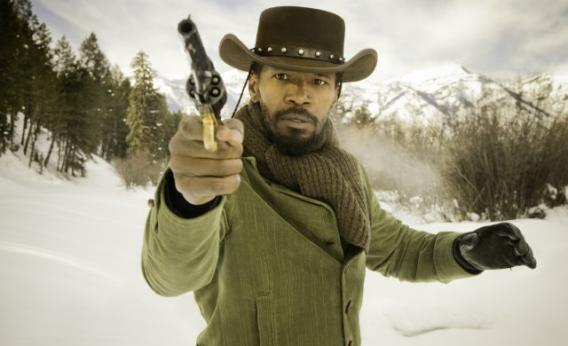
Breaking News: "Oberlin announces campus security to be bolstered by 'Django Patrols'"

Artist's conception of
Oberlin's new security force
OBERLIN, OH -- After a spate of nationally publicized racist hate crimes during February's Black History Month, which runs until March 10th on this progressive campus, Oberlin College announced today that it was bolstering campus security with "Django Patrols." Unemployed black victims of structural racism are being bused in from Cleveland, handed six-shooters, and told to shoot first, ask questions later if they see any white racists.

The response among experts was highly positive.

Wayne LaPierre, head of the National Rifle Association, replied, "Now that's the kind of proactive institutional creativity we've been talking about: pro-gun sales pro-responsible gun ownership and anti-racism! What could possibly go wrong?"

Quentin Tarantino, who won a Best Writer Oscar last week for his screenplay of Django Unchained, faxed back a hand-printed note reading, "Im like wow! Remember that seen in Balcazars awsome spahggeti westurn Jesse Doe'snt Forgiv - He KKKill!? Well, this is just like that only like mor so, you now?!"

Oberlin grad Lena Dunham, star of HBO's "Girls," used all of Twitter's 140 character limit to enthuse, "Hey Obies, Oberlin's diverse anti-patriarchal revolutionary yet comfortable and accepting climate is treasured forever in my heart, but ar"

Articulate movie star Christoph Waltz, who earned the Best Supporting Actor Academy Award for playing Django Freeman's mentor in mayhem, Dr. King Schultz, issued a quadrilingual statement of praise that, unfortunately, exceeded in size all available disk storage options. Requests for a manageable excerpt had not been returned as of press time, despite multiple calls to Waltz's longtime publicist, Christopher Dorner.

Michelle Malkin (Oberlin '92) on Hate Hoaxes and Hate Hysteria

Michelle Malkin is a graduate of Oberlin:
The Coddling of College Hate Crime Hoaxers 
By Michelle Malkin · March 6, 2013         
American college campuses are the most fertile grounds for fake hate. They're marinated in identity politics and packed with self-indulgent, tenured radicals suspended in the 1960s. In the name of enlightenment and tolerance, these institutions of higher learning breed a corrosive culture of left-wing self-victimization. Take my alma mater, Oberlin College. Please. ...
Oberlin alumna Lena Dunham, a cable TV celebrity who starred in a pro-Obama ad likening her vote for him to losing her virginity, took to Twitter to rally her fellow "Obies." The Associated Press dutifully reported Dunham's plea as news: "Hey, Obies, remember the beautiful, inclusive and downright revolutionary history of the place you call home. Protect each other."

Judging from their tweets, it sound like staffwriter Lesley Arfin brings "Girls" much of its needed edge.
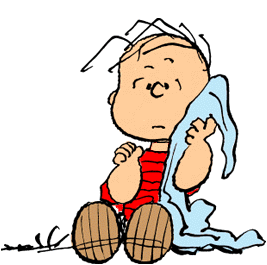
But what the AP public relations team for Dunham and the Oberlin mau-mau-ers didn't report is the rest of the story. While Blame Righty propagandists bemoaned the frightening persistence of white supremacy in the tiny town of Oberlin, city police told a local reporter that eyewitnesses saw no one in KKK garb -- but instead saw a pedestrian wearing a blanket. Yes, the dreaded Assault Blanket of Phantom Bias. 
... Color me unsurprised. The truth is that Oberlin has been a hotbed of dubious hate crime claims, dating back to the late 1980s and 1990s, when I was a student on campus. ... 
In 1993, a memorial arch on campus dedicated to Oberlin missionaries who died in the Boxer Rebellion was defaced with anti-Asian graffiti. The venomous messages ... led to a paroxysm of protests, administration self-flagellation and sanctimonious resolutions condemning bigotry. But the hate crime was concocted by an Asian-American Oberlin student engaged in the twisted pursuit of raising awareness about hate by faking it, Tawana Brawley-style. 
Segregated dorms, segregated graduations and segregated academic departments foster paranoid and selective race-consciousness. While I was on campus, one Asian-American student accused a library worker of racism after the poor staffer asked the grievance-mongering student to lower the blinds where she was studying. Call the Department of Justice! 
A black student accused an ice cream shop owner of racism after he told the student she was not allowed to sit at an outside table because she hadn't purchased any items from his store. Alert the U.N. Commission on Human Rights! 
In 2006, I went back to Oberlin to confront the campus with the hate crime hoax phenomenon. As I told students back then, liberals see racism where it doesn't exist, fabricate it when they can't find it and ignore it within their own ranks. I documented case after case of phony racism by students and faculty, from Ole Miss to Arizona State to Claremont McKenna, and contrasted it with the vitriolic prejudice that tolerant lefties have for minorities who stray from the political plantation. 

March 5, 2013

NYT walks Oberlin story back after falling for KKK hysteria

As I point out in my new Taki's Magazine column, although the American news media went nuts over the purported sighting of a one-man Ku Klux Klan rally at Oberlin, America's most racially hypersensitive college, only two newspapers in the world bothered calling the local cops to see whether the KKK appearance had actually happened. 

Today, the NYT's original reporter, Richard Perez-Pena, got replaced on the story with veteran Trip Gabriel, who wrote something of a walkback this evening:
Police Unsure of Klan Garb at Troubled College
By TRIP GABRIEL 
Published: March 5, 2013 
The police in Oberlin, Ohio, have been unable to confirm a report of a person wearing a white robe and hood that caused Oberlin College to cancel classes on Monday and plunged the campus in to a day of soul-searching.
Shortly after midnight on Monday, a female student reported seeing someone dressed in what looked like Ku Klux Klan regalia walking alone on campus near the Afrikan Heritage House. Campus security officers and the Oberlin Police Department responded, but could not find the person. 
Another student later told the police that at about the same time, he spotted a person wrapped in a blanket, raising the possibility that the woman had been mistaken. Lt. Mike McCloskey of the Oberlin police said it was unclear whether the two sightings were of the same person.

GL Piggy is all over the Oberlin story.

Sailer in Taki's: "KKK Is the New UFO"

From my new column in Taki's Magazine:
The current identity-politics hysteria was launched about a year ago (conveniently enough for the Obama reelection campaign) with the news that an angelic black baby named Trayvon Martin had been gunned down by white racist George Zimmerman. 
In the latest brouhaha, Oberlin, a (very) liberal arts college outside of Cleveland, immediately shut down all classes Monday to hold a frenzied, Cultural Revolution-style rally against the rising tide of racism because one student claimed to have spied a one-man Ku Klux Klan rally on campus in the wee hours of the morning. 
The past year reminds me of a similar frenzy in the early 1990s that Bill Clinton rode to the White House. Do you remember the “Year of the Woman,” in which Clinton (of all people) ran as the nemesis of bosses who make passes at the women who work for them? No? Well, since nobody else seems to remember the recent past, it’s worth mentioning how these manias seem to start up in conjunction with Democratic presidential campaigns, then sputter on for years.

Read the whole thing there.

The Love Life of Hugo Chavez

Back in 2000, I put forward a theory of why, 500 years after Cortez, Mexico, like many Latin American countries, is still run by largely white people despite no sharp color line:
... Now, in Mexico every century or so, there is a massive upheaval like the Revolution of 1910. The white monopoly is fractured. Up through the cracks come the most talented mestizos and Indians. They start dynasties that persist to this day … but their grandsons and great-grandsons are notably whiter than they were, since the men of the family have been exploiting their social ascendancy to marry white women. (Of course, many rich Mexican men father second families with their lower-ranking mistresses. But these kids seldom get the breaks in life that the legitimate children do.)

The late Venezuelan presidente Hugo Chavez, whose family life I wrote about in 2010, would be a good example of a poor man of pardo background (Indian, black, and white), who clawed his way up in life. But, I suspect his grandchildren, especially by the second wife he obtained after becoming successful, will be quite a bit fairer than him.

Mexico: "The Country that Stopped Reading"

Mexico gets relatively little coverage in the United States English-language media despite its immense importance to the future of our country. One reason is because the population is so aliterate -- not illiterate, just apathetic about reading and writing. (This spills over to the Mexican-American population.)

A Mexican novelist writes:
The Country That Stopped Reading 
By DAVID TOSCANA 
Nowadays more children attend school than ever before, but they learn much less. They learn almost nothing. The proportion of the Mexican population that is literate is going up, but in absolute numbers, there are more illiterate people in Mexico now than there were 12 years ago. Even if baseline literacy, the ability to read a street sign or news bulletin, is rising, the practice of reading an actual book is not. Once a reasonably well-educated country, Mexico took the penultimate spot, out of 108 countries, in a Unesco assessment of reading habits a few years ago. 

The PISA scores show Mexican doing mediocre overall, but with tiny proportions of high scorers, well behind a somewhat comparable country like Turkey in coming up with an intellectual elite.
One cannot help but ask the Mexican educational system, “How is it possible that I hand over a child for six hours every day, five days a week, and you give me back someone who is basically illiterate?” 
Despite recent gains in industrial development and increasing numbers of engineering graduates, Mexico is floundering socially, politically and economically because so many of its citizens do not read. Upon taking office in December, our new president, Enrique Peña Nieto, immediately announced a program to improve education. This is typical. All presidents do this upon taking office. 
The first step in his plan to improve education? Put the leader of the teachers’ union, Elba Esther Gordillo, in jail — which he did last week. Ms. Gordillo, who has led the 1.5 million-member union for 23 years, is suspected of embezzling about $200 million.

I'm amazed he could find her to arrest her, since she spends most of her time at her luxury homes in California.
She ought to be behind bars, but education reform with a focus on teachers instead of students is nothing new. For many years now, the job of the education secretary has been not to educate Mexicans but to deal with the teachers and their labor issues. Nobody in Mexico organizes as many strikes as the teachers’ union. And, sadly, many teachers, who often buy or inherit their jobs, are lacking in education themselves.

Many public school teaching jobs in Mexico are hereditary sinecures. If you die, your heir has the right to step into your job. If he doesn't want a teaching job, he can auction it off to people who do.
During a strike in 2008 in Oaxaca, I remember walking through the temporary campground in search of a teacher reading a book. Among tens of thousands, I found not one. I did find people listening to disco-decibel music, watching television, playing cards or dominoes, vegetating. I saw some gossip magazines, too.

Welcome to the future of America!
... But perhaps the Mexican government is not ready for its people to be truly educated. We know that books give people ambitions, expectations, a sense of dignity. If tomorrow we were to wake up as educated as the Finnish people, the streets would be filled with indignant citizens and our frightened government would be asking itself where these people got more than a dishwasher’s training.

You just lost Jeb Bush there with that last paragraph, Senor Toscano. Why would he or his friends in Mexican politics want a Finnish quality electorate? What's in it for him and his? Would George P. Bush be talked up as future Presidential Timber in Finland?