February 7, 2012

David Brooks' Self-Parody: "Flood the Zone" (A.K.A., Drain the Treasury)

Jodi Kantor notes in The Obamas that David Brooks of the New York Times is "the President's favorite pundit." In turn, I've been told on extremely good authority that Brooks is a regular reader of me. Being a covert member of the Steveosphere makes Brooks perhaps the most interesting conventional wisdom columnist, but also creates a lot of stress for the poor man. After such knowledge, what forgiveness? How do you triangulate your way to something that Obama will nod complacently over without totally boring yourself? How do you stay on TV, mouthing 21st Century platitudes, while knowing that a few people know you know?

This tension usually manifests itself in a couple of columns per year that only make sense under the supposition that I represent the conventional wisdom and that he's the man with challenging new ideas as he tries to dream up new epicycles to refute my Occamite slashes.

But then there's his new NYT column "Flood the Zone," the purpose of which is to eventually get around to gently criticizing Obama for his health insurance contraception stand. But, first, he feels he has to provide air cover for himself by trotting out all the shibboleths of 21st Century conventional wisdom.  

And that part is just brutal self-parody, presumably driven by a certain amount of self-loathing. No, I didn't write this, but if you read it as if I wrote it as a vicious satire on Brooks, it's quite funny. So, there's no need for me to respond to it. It's self-detonating:
The essential truth about poverty is that we will never fully understand what causes it. There are a million factors that contribute to poverty, and they interact in a zillion ways. 
Some of the factors are economic: the shortage of low-skill, entry-level jobs. Some of the factors are historical: the legacy of racism. Some of the factors are familial: the breakdown in early attachments between infants and caregivers and the cognitive problems that often result from that. Some of them are social: the shortage of healthy role models and mentors. 
The list of factors that contribute to poverty could go on and on, and the interactions between them are infinite. Therefore, there is no single magic lever to pull to significantly reduce poverty.
The only thing to do is change the whole ecosystem. 
If poverty is a complex system of negative feedback loops, then you have to create an equally complex and diverse set of positive feedback loops. You have to flood the zone with as many good programs as you can find and fund and hope that somehow they will interact and reinforce each other community by community, neighborhood by neighborhood. 
The key to this flood-the-zone approach is that you have to allow for maximum possible diversity. Let’s say there is a 14-year-old girl who, for perfectly understandable reasons, wants to experience the love and sense of purpose that go with motherhood, rather than stay in school in the hopes of someday earning a middle-class wage. 
You have no idea what factors have caused her to make this decision, and you have no way of knowing what will dissuade her. But you want her, from morning until night, to be enveloped by a thick ecosystem of positive influences. You want lefty social justice groups, righty evangelical groups, Muslim groups, sports clubs, government social workers, Boys and Girls Clubs and a hundred other diverse institutions. If you surround her with a different culture and a web of relationships, maybe she will absorb new habits of thought, find a sense of belonging and change her path.

"The Real Romney"

In Taki's Magazine, I review The Real Romney, the new biography of the candidate:
The Creepily Normal Mormon 
In his new book Coming Apart: The State of White America, 1960-2010, master social scientist Charles Murray flavors his statistical portrait of the widening gap between the classes with some human interest by referring to the bottom 30% of American whites as “Fishtown” (after the gritty Philadelphia neighborhood) and the upper 20% as “Belmont” (after the leafy Boston suburb). 
Perhaps coincidentally, Belmont, MA has been home for the last four decades to GOP frontrunner Mitt Romney and his lovely wife Ann, ever since Mitt was at Harvard earning his JD and MBA degrees. 
Indeed, this patrician paterfamilias is almost a cartoon embodiment of Murray’s thesis about elites losing touch with the rest of America ...

Read the whole thing there.

The Corn Bomb Gap

Personally, I think Krauthammer's version of these talking points in the Washington Post was more excitingly written up, but the NYT goes with the Mossad version:

From the New York Times:
OP-ED CONTRIBUTOR
Iran’s Achilles’ Heel
By EFRAIM HALEVY 
THE public debate in America and Israel these days is focused obsessively on whether to attack Iran in order to halt its nuclear weapons ambitions; hardly any attention is being paid to how events in Syria could result in a strategic debacle for the Iranian government. Iran’s foothold in Syria enables the mullahs in Tehran to pursue their reckless and violent regional policies — and its presence there must be ended. ... 
... pave the way for Mr. Assad’s downfall.
Once this is achieved, the entire balance of forces in the region would undergo a sea change. Iranian-sponsored terrorism would be visibly contained; Hezbollah would lose its vital Syrian conduit to Iran and Lebanon could revert to long-forgotten normalcy; Hamas fighters in Gaza would have to contemplate a future without Iranian weaponry and training; and the Iranian people might once again rise up against the regime that has brought them such pain and suffering.
Those who see this scenario as a daydream should consider the alternative: a post-Assad government still wedded to Iran with its fingers on the buttons controlling long-range Syrian missiles with chemical warheads that can strike anywhere in Israel. This is a certain prescription for war, and Israel would have no choice but to prevent it.
Efraim Halevy, a former Israeli national security adviser and ambassador, was director of the Mossad from 1998 to 2002. 

Okay, so the threat Syria's chemical warheads pose to Israel is kind of like the threat that Venezuela poses to Florida. I mean, if Hugo Chavez suddenly decided that life wasn't worth living anymore and he wanted to be blown up by the American military, he might attack America. Maybe with speedboats loaded with WWI-technology chemical weapons. They could roar right up to Key West and wipe out some discos and t-shirt stands. I mean, why not?

In 2010, Oliver Stone made a documentary where he wandered around Latin America interviewing lefty caudillos. Chavez was the star. As Chavez is showing Stone a corn-processing plant built by Iranian technicians, he deadpans: "This is where we're building the Iranian atomic bomb ... the Corn Bomb." But Chavez gets a worried look on his face as if he were thinking, "Oh, crap, this is too serious to joke about. If that camera happened to run out of videotape right before my "Corn Bomb" joke, the USAF might blow us up."

By the way, the CIA World Factbook ranks Venezuela's military spending as a percent of GDP at 118th in the world. Israel ranks 6th, Syria ranks 11th, and Iran 62nd. But that was back in 2005 because the CIA hasn't bothered to update the list in a long time. Back in 2006, during the frightening bout of war fever in Washington caused by Israel's spat with Hezbollah, I wrote a bunch of blog posts citing the CIA's then-current rankings of military expenditures to show that the most of the world outside the Washington-Tel Aviv corridor was losing interest in war (prefiguring Steven Pinker's 2011 book The Better Angels of Our Nature). The CIA has barely updated their list since. And I've never seen anybody complain that this vital information isn't being kept up to date. Nobody seems to care about data. It would just get in the way of all the fun that Krauthammer and the Mossad alumni are having.

If the courts are overturning 2008 California initiative votes ...

... as they did today with the Proposition 8 vote against gay marriage on the grounds that majority rule violates minority rights, can they please also throw out Proposition 1A from the same ballot? As you'll recall, California's majority of marching morons voted to borrow $10 billion for a SuperTrain! that would go vroom-vroom between Los Angeles and San Francisco real fast. (It's now expected to cost $98 billion). As a member of California's endangered and oppressed minority of non-morons, I want the $10 billion back. 

It's Naptime in America


"Court Strikes Down Ban on Gay Marriage in California"

Obviously, by hook or by crook, gay marriage is going to happen in America, because powerful people want it to happen. Sure, last time I checked, gay marriage had gone 0 for 31 when presented to voters on ballots, but how can something so inherently suspect as "majority rule" be allowed to stand in the way of what has been defined as a "minority right?" Indeed, the very fact that gay marriage lost 31 straight elections proves that it must be imposed. I mean, when you stop and think about it, holding elections and abiding by the results is downright anti-democratic, because the contemporary understanding of democracy is victory for The Good People (i.e., those poor, powerless victims holding the bullhorn) by any means necessary. 

Will gay marriage turn out in the long run to have unintended consequences? Yeah, probably. Most things do. Has there been a frank, widespread public discussion to try to anticipate some of those unintended consequences? Of course not. That would be insensitive and thus outside the "bounds of public discourse."

Obama running as the "city of Detroit" candidate: Has this been fully thought through?

John Dickerson writes in Slate:
Detroit for President? 
Is the "Halftime in America" ad a preview of Obama's Re-election Campaign? 
Did the first Obama re-election ad run during the Super Bowl? You might have missed it since the president wasn't even mentioned. It was a Chrysler ad, although even that wasn’t obvious. Instead, more than 111 million viewers were greeted by that tough-talking American icon Clint Eastwood as he delivered what amounted to a locker room speech to the country. “It's halftime in America,” he intoned, as the New York Giants and New England Patriots went in for their midgame break. He heralded the auto industry’s revival and said it is a model for a nation poised for a comeback. By the end of the stirring message, pollsters could probably have found a majority of the country ready to elect the city of Detroit president. 
Since the Motor City is not on the ballot, the president would like you to consider him as a possible substitute.

Uhhmm ... Obama running on the theme that he will Detroitify the rest of America sounds like it's got some potential downsides. I dunno, but I'm just sayin ... It's reminiscent of Obama's brainstorm in 2006-2007 when he believed he was going to be the first Democrat since Jimmy Carter to win the votes of white Evangelicals. How? By playing up his long relationship with Rev. Jeremiah "Audacity of Hope" Wright!

Let's try out Obama's victory speech next November:
"This was the moment when the grass began to grow over our cities and the prairie began to return to our streets." 

I'm just not seeing it. But, then, what do I know?

How to sell used cars to African-Americans

Taking Judge Richard Posner's skeptical side in the debate with Malcolm Gladwell over the ethical rectitude of car salesmen, a commenter calls attention to these catchy low-rent commercials from the good old days of the Bush Bubble. Starring Washington D.C.-Baltimore area pro athletes like LaVar Arrington and Ray Lewis, they were hugely successful at increasing sales at Easterns Motors, a D.C. used car lot chain run by cousins Robert and Eiman Bassam:  
At Eastern Motors/Your job’s your credit!
Fords, Hondas, Chevys, Beamers,/And minivans
Over 600 cars, trucks, SUVs/ Are you listenin’ man?
Let Eastern Motors/Put you in a car today!
Let Eastern Motors/Finance it all the way!

And here is a civic-minded commercial from Easterns educating its black customer base on how to negotiate to get the best price possible. Make sure to act aloof about the car you really want in front of the salesman! 

The commenter adds:
BTW, as you can probably tell from the commercial, Eastern Motors is like the Countrywide of car dealers. The founder and CEO, who is a "gold-chainer" type, sounds like Angelo Mozilo:
The would-be buyers he spoke with were looking for quality used cars, and many had been turned down by area dealerships. For Bassam, the trend was too obvious to ignore. “We realized very quickly that the subprime market was underserved and mistreated,” he says."

Fortunately, these days we all understand that immigration is sacred. What could be more morally uplifting than the sight of people from all over the world -- from the Levant to Korea -- coming to America to outsmart and rip off African-Americans, to reduce black American citizens to debt peonage?

February 6, 2012

Super Bowl and race

A reader writes:
The Patriots have had a lot of success with a lot of white guys on their team. More specifically, they let white players play positions most commonly handled by black players: running back (Danny Woodhead), defensive back / kickoff returner (Julian Edelman), receiver / punt returner (Wes Welker). They're almost the Duke of the NFL.

Those three played at obscure to formerly obscure college programs: Div. II Chadron St., Kent St., and Texas Tech. And they're all under six feet tall, too. They look more like Mark Wahlberg starring in an inspirational sports movie than real life Super Bowl players.

On the other hand Rob Gronkowski, the Patriot's 6'-6" 265 lb. superstar tight end who was hobbled with a sprained ankle, looks like the college football player in a 1940s joke:

Professor of Philosophy [peeved at the intelligence of scholar athletes recruited by the college's football coach]: "Mr. Gronkowski, can you tell us who is the author of The Critique of Pure Reason?"

Big Dumb Football Player [sweating, clueless, and apologetic]: "Professor, I can't ..."

Professor [surprised]: "Correct!"
The Giants, on the other hand, are a prototypical team with black players in black roles (RB, WR, D line) and white players in white roles (line, special teams, QB). They also have pretty good call and response chemistry: 
http://www.youtube.com/watch?v=dyNPeLJBo7Y 
The racial angle wasn't played up because Eli is white, but the Giants have far superior athletic talent. If you gave a Martian a book about the last 20-30 years of American sport, especially football and basketball, and then showed him the roster of each team, he'd have no choice but to assume the Giants are 2 or 3 touchdown favorites. 
The Patriots came close, but it will be interesting to see which approach wins out over time.

With the exception of Brady and the two young tight ends, the Patriots looked like a team that has been drafting late in each round for most of the last decade due to their winning records. It looked like a roster brilliantly scrounged together from overlooked leftovers. 

Way back in 2005, Inductivist looked for me at the won-low records of NFL teams over the last 2.3 years to see if there was any correlation between teams' performance and their racial makeup. He found correlations around zero for starters, suggesting that teams were not overlooking white starters: i.e., no market inefficiencies caused by racial bias for starters.

On the other hand, he found positive correlations between the number of white nonstarters and wins. Perhaps white second stringers tend to be more versatile, or are less poisonous to the locker room atmosphere when they aren't starting or whatever. I never heard if anybody redid this study to see if the effect remained true. This is just not the kind of thing that people talk about. 

Or maybe NFL coaches had noticed their oversights and rectified this market inefficiency. This year's Patriots certainly looked like their ruthlessly intelligent coach Bill Belichik was trying hard to find cheap but effective football players who don't look like the stereotypes. Over the last 11 years, New England has averaged better than an 11-5 record in the regular season, and 13.5-2.5 over the last two seasons. It's very hard to keep a dynasty going in the NFL where the system is rigged in various ways for parity. It looks like possibly one of the ways they've stayed in the hunt is by exploiting market inefficiencies in utility players. But it's hard to tell without doing another statistical analysis. You might think that in this age of Moneyball that this type of analysis would be done all the time, but then you wouldn't under this age of Moneyball.

Chinese-American guy lights up NBA

Here's a fun story: Jeremy Lin, a 6'-4" basketball guard from Harvard, became the first Asian-American in the NBA awhile ago, but he has mostly sat on the far end of the bench. But, he got into a game for the New York Knicks on Saturday night and scored a career high 25. Tonight, he got his first ever start and scored 28 in a win over Utah, despite all the big money players on the Knicks (Carmelo Anthony, Amare Stoudemire, and Tyson Chandler) being out.

I don't know about Lin in particular, but as the Ivy League has gotten richer endowments, its sports teams have gotten better. It doesn't give out sports scholarships, but it gives out so much financial aid to middle class families now, that it makes sense for pretty smart and pretty athletic kids to play ball for the Ivy League: "Okay, UT El Paso, Iowa State, and Valparaiso are offering me full rides, or, for $5,000 per year I can go to Yale? Is this a trick question?"

I vaguely know a heavily recruited basketball player who enrolled in the last few years at a Very Famous Ivy League College. It was funny reading the ESPN interviews with him on Signing Day because the questions from the sportswriters were all framed as if all his ambitions were focused on the basketball court (Q. So, are you signing with Very Famous Ivy League College because you think you can help them win its first Ivy League title in 17 years? A. Uh, yeah, sure ... I mean, why not?), when his motivations for signing with VFILC were far more mature: He wants to go through life as a graduate of that Very Famous Ivy League College. It was like when I was at Rice in the 1970s, and the basketball coaching staff was alway scowling about how the 6'-11" backup center was just exploiting them to get a Rice engineering degree, always sneaking off to the library to work on differential equations.

Is Israel the most easterly outpost of Western civilization?

Niall Ferguson, the Scotch historian currently at Harvard, bangs the war drums in Newsweek:
Israel and Iran on the Eve of Destruction in a New Six-Day War 
Jerusalem—It probably felt a bit like this in the months before the Six-Day War of 1967, when Israel launched its hugely successful preemptive strike against Egypt and its allies. Forty-five years later, the little country that is the most easterly outpost of Western civilization has Iran in its sights.

Why is Israel the most easterly outpost of Western civilization? What about Christian countries much farther to the east, like Armenia and Georgia? Not to mention Russia (Moscow is east of Jerusalem -- and if you are making up a list of important figures in Western civilization, it's hard to leave off Tolstoy, Dostoevsky, Tchaikovsky, Chekhov, Stravinsky, and Nabokov, right)? 

Here in L.A., there are lots of Armenians and lots of Israelis. I don't think many people here would define Israelis as obviously more members of Western civilization than Armenians. Back in December, I went to an Armenian wedding in the church across the Hollywood Freeway from Universal Studios. Here's their webpage. Seems pretty Christian to me. Moreover, Armenians make up a small but hardly unnoticeable number of eminent figures in the cultural history of Western civilization, such as the composer Khachaturian

Now, lots of Armenian-Americans would like more help from the U.S. government in their struggles with their Muslim rivals Azerbaijan and Turkey. And Armenians are relatively prosperous, intelligent, and energetic. But, truth be told, Armenian isn't a very important country, so, despite a sizable Armenian Caucus in the U.S Congress (overwhelmingly made up of non-Armenians), the U.S. doesn't do a lot for Armenia. Armenian concerns don't take up much space in American newspapers, even in L.A.

Fifty years ago, Israel was culturally an outpost of northern Europe, the late Austro-Hungarian Empire's southernmost province. But my vague impression is that it has been working hard to stop being a neurotic, high-achieving Teutonic culture and become a pleasure-loving Mediterranean culture. The Ashkenazis (and their Russian in-laws) still more or less run the place, but they've ceded a lot of cultural legitimacy to non-Ashkenazi Jews. Israel still produces some classical musicians and chemists, but the Jersey Shoreification of Israeli daily life is ongoing, along with various other trends, such as the Black Hatification of parts of the country, and the Afrikaanerization of the West Bank. Its cultural future seems kind of like Armenia or Lebanon.

Chinese Cheating

Mark McDonald writes in the NYT:
In many cases, according to anecdotal evidence and hard-data surveys, the successful Chinese applicants will have cheated their way into college. 
There are now 57,000 Chinese undergraduates at American universities, as my colleague Tamar Lewin reports. Five years ago, there were just 10,000. And top private universities in the United States now have freshman classes with 15 percent foreign students or more.
... Many Chinese families hire agents to help them navigate the applications process, and an agent’s fee can range up to $10,000, plus an equally large bonus if the student gets into a school highly ranked by U.S. News & World Report, the QS rankings and the so-called Shanghai List. 
Zinch China, a consulting company that advises American colleges and universities about China, published a report last year that found cheating on college applications to be “pervasive in China, driven by hyper-competitive parents and aggressive agents.’’ 
From the survey’s introduction: “Our research indicates that 90 percent of recommendation letters are fake, 70 percent of essays are not written by the applicant, and 50 percent of high school transcripts are falsified.’’ 

I wonder what these rates are in America? I'm not convinced Americans are that ethical about college applications anymore either.
... There might well be a cultural disconnect here. Fudging a transcript, plagiarizing a previously “successful” essay or embroidering your credentials is often seen as common practice in China — a low means to a higher end. 
But not always. 
Jiang Xueqin is the deputy principal of Peking University High School, one of China’s s top schools, and also directs its international division. In a commentary for The Chronicle, he said: 
“To be fair, American college recruiters in China feel overwhelmed by the proliferation of cheating, lying, and fraud: Study abroad is big business in China, and young Ivy League graduates write essays for Chinese applicants while many a Chinese public school fakes transcripts and recommendation letters.’’

Americans should demand better ethics from the Chinese. Criticism makes people better. The world will be a better place in the future if the Chinese are now shamed into having more of a culture of shame, like the Japanese have.

Singapore is an example of where the government has reduced the level of corruption among the Chinese over the last 50 years.

February 5, 2012

Why car salesmen are able to rip off black guys

Law professor Ian Ayres did a study once showing that car salesmen tend to drive tougher bargains with black shoppers than with white shoppers. Malcolm Gladwell explained in Blink that this was only because the car salesmen didn't realize they were being prejudiced, and would stop as soon as they read Blink and realize they are leaving money on the table. Judge Posner and I disagreed, arguing that, in our experience, car salesmen were more cynical than Gladwell assumes. The good folks at Cars.com just spent $3.5 million to buy 30 seconds of Super Bowl air time to settle this long running argument by showing us what car salesmen see when they look at black shoppers.

Are Super Bowls getting better?

I made sure to come home from school on time on Monday, January 16, 1967 so I could watch the entire first ever Super Bowl on tape delay. Super Bowl I had been played the day before in the L.A. Coliseum, but it hadn't sold out, so it wasn't shown live in L.A., just on tape delay the next afternoon at about 3:30 pm. It turned out to be a pretty lousy viewing experience. 

My recollection is that most of the early Super Bowls were either lopsided or inept. For example, Super Bowl VII Miami 14 - Washington 7 was a real bore, memorable only for Garo Yepremian's pass, which was famous for awhile as the worst play in the history of the NFL. The imported soccer player's attempt at a forward pass only goes about 4 inches forward, so he then bats the football up in the air as if it were a volleyball, allowing the Redskins to intercept it and score their only touchdown of the game. 

After awhile, when I was a teenager, I made a rule not to waste time watching the Super Bowls, a rule frequently broken, but one that seemed to be pretty sensible. Conference championship games were often thrilling, but Super Bowls were typically a waste of time. 

At some point in the 1980s I read a theory for why Super Bowls were so bad: the two week layoff between the conference championship and the Super Bowl and the intervening media hoopla posed unusual challenges for coaches. Some coaches made excellent use of the time, while others, unable to restrain their mania, whipped their teams into a game day frenzy by about Day 10 only to have them come out flat half a week later. 

I don't know if that was true, but my impression is that Super Bowls are seldom the stinkers they used to be so regularly. I wonder why that is? Obviously, the skill level is higher, but why do the games seem more competitive? Back in the 1970s, the Rose Bowl was usually more exciting than the Super Bowl, even though the skill level of college players is lower.

February 4, 2012

The Great Game ain't so great anymore

No, this isn't about the Super Bowl. It's about something much less important. (Or so it increasingly seems.)

Charles Krauthammer waxes strategic in the Washington Post:
Which is why the fate of the Assad regime [in Syria] is geopolitically crucial. ... But strategic opportunity compounds the urgency. With its archipelago of clients anchored by Syria, Iran is today the greatest regional threat — to Saudi Arabia and the Gulf states terrified of Iranian nuclear hegemony; to traditional regimes menaced by Iranian jihadist subversion; to Israel, which the Islamic Republic has pledged to annihilate; to America and the West, whom the mullahs have vowed to drive from the region. 
No surprise that the Arab League, many of whose members are no tenderhearted humanitarians, is pressing hard for Assad’s departure. His fall would deprive Iran of an intra-Arab staging area and sever its corridor to the Mediterranean. Syria would return to the Sunni fold. Hezbollah, Tehran’s agent in Lebanon, could be next, withering on the vine without Syrian support and Iranian materiel. And Hamas would revert to Egyptian patronage. 
At the end of this causal chain, Iran, shorn of key allies and already reeling from economic sanctions over its nuclear program, would be thrown back on its heels. ... It’s not just the Sunni Arabs lining up against Assad. Turkey, after a recent flirtation with a Syrian-Iranian-Turkish entente, has turned firmly against Assad, seeing an opportunity to extend its influence, as in Ottoman days, as protector/master of the Sunni Arabs. The alignment of forces suggests a unique opportunity for the West to help finish the job. ... Force the issue. Draw bright lines. Make clear American solidarity with the Arab League against a hegemonic Iran and its tottering Syrian client.

Krauthammer would make an outstanding television color announcer in case anybody ever forms the National Risk League and broadcasts that old board game where you try to conquer the world. He'd get really worked up over how holding Australia and South America are the keys to the early game and make the whole thing sound kind of exciting. He's really good at this.

Krauthammer is an amazing man. He graduated on time with his class at Harvard Medical School despite being paralyzed for life during his studies.

As you'll recall, a decade ago, Krauthammer was banging the war drums for overthrowing the anti-Iranian Sunni Arab regime in Iraq. We invaded Iraq and handed the country over to Shi'ites whose leaders had gone into exile in Iran. So, Krauthammer has helped empower Iranian hegemony, which is why I guess we should listen to him now on the need to fight Iranian hegemony.

But, here's a question: Exactly, how harmed are you by the extension of Iranian influence over Iraq that Krauthammer helped bring about? Let me make clear I'm not talking about the trillions of dollars wasted invading Iraq and all the dead and crippled. I'm just asking here about the outcome: many of Iran's favorite Iraqis coming to power in Iraq. Obviously, in the Great Game it's an absurd and humiliating own goal for America.

But, what are the tangible harms to Americans of greater Iranian influence? I really don't know. Are we paying more at the pump for gas? Have the Iranians used the power that Krauthammer helped hand them to corner the global pistachio nut market?

If greater Iranian influence is as big a disaster for Americans as Krauthammer makes it sound in this column, then surely Krauthammer would have been fired from his gig at the Washington Post. Instead, everybody in Washington acts like Krauthammer just got his Super Bowl prediction wrong. No biggie.

Maybe they are right.

In the real world, more and more decisionmakers in other countries are just kind of checking out of this whole Great Game thing. Consider Iran. In Krauthammer's fevered imagination, Iran is a dynamic hegemon, but according to the CIA World Factbook, Iran is 62nd in the world in terms of military spending as percentage of GDP at 2.50 percent as of 2006.

Yes, but, what is Iranian military spending at today, you ask? I dunno. Why not? Because the CIA has barely updated its entire list in about a half of a decade. For example, according to the CIA's listing, the United States is 23rd in the world at 4.06 percent for "2005 est."

Presumably, somebody at Langley has a number for the U.S. that's less than seven years old (I hope), but there just doesn't seem to be much demand from the public or the press for fresher figures.


There are, as far as I can tell, no military spending moneyballers poring over this table to discover crucial trends. Fewer and fewer people care about the Great Game. Of those who do, an ever-increasing fraction live within the home delivery circulation zone of the Washington Post


If you were an Iranian subscriber to the Post who works at Iran's "Interests Section" inside the Pakistani embassy in Washington, what would be your considered judgment? What would you report home to Tehran after reading the Post day after day? I think you'd end up saying: "We can't compete with the Krauthammers. They are better than us at putting together words. Therefore we can't guarantee that the ruling class in Washington won't work itself into another frenzy like it did in 2003 and do something stupid. So, we'd better get ourselves a few nukes as a deterrent."


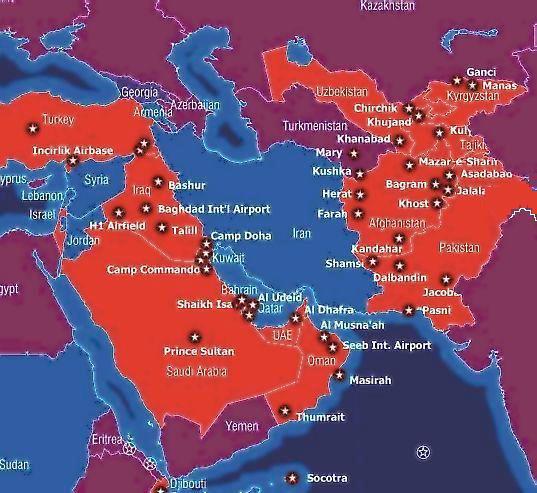
Map from Juan Cole.

The Obama Reality Distortion Field

The force was powerful in 2007-2008 and remains strong today when it comes to race, although it worked best on Obama himself.

For example, Jodi Kantor did a Q&A for Reddit to promote her book The Obamas. Here's the funniest line: 
When I started covering him, in early 2007, he thought that he was going to be the Democratic candidate to finally win over evangelical votes, and that his own religious background (Jeremiah Wright, Trinity etc) was going to help!

Of course, nobody except Kantor notices that this is funny.

The Frenchest thing anybody ever said in English

I was watching an old Rick Steves travelogue about Paris with my father, and Rick goes cheese-shopping with a French lady who owns a local restaurant. She picks up a hunk of cheese so pungent that I could just about smell it streaming through my Roku device, and moans ardently:
"Yes, it smells like zee feet of angels."

February 3, 2012

Obama is an overly polite loner night dweeb

The Obama Administration has leaked a bunch of memos with Obama's comments in the margins to Ryan Lizza of The New Yorker, who has written them up as best he can as a story of Republican intransigence. 

Mickey Kaus responds:
What does he do all day? Are you impressed with the image of Obama-at-work left by Ryan Lizza’s “Obama Memos” piece in the New Yorker? The President’s decision-making method–at least as described in the piece–seems to consist mainly of checking boxes on memos his aides have written for him. … They offer him four stimulus packages, none bigger than $890 billion. He does not ask for more but does push for an “inspiring ‘moon shot’” initiative. At first it’s a “national ‘smart grid’”–hard not to get inspired just hearing those words! When aides explain that this isn’t stimulating enough, he settles for “high-speed trains.” … He’s presented with a list of $60 billion in cuts to his core stimulus policies, and writes “OK.” … He “authorize[s] his staff” to plan a likely-to-be-useless “bipartisan ‘fiscal summit,’” asks “what are the takeaways”” is told he could “ask .. for continued dialogue,” and doesn’t write “this is all BS” and cancel the summit, which in fact proves useless. … He’s offered a box to extend a one year non-defense spending freeze into a three year freeze. He doesn’t ask for a bigger, smaller, longer or broader freeze. He draws “a check mark.” … Finally, he’s presented with a classic three-box-con memo–two extreme boxes (big new jobs package, big new deficit package) and a safer middle box (“smaller, more symbolic” deficit efforts), a matrix clearly designed to get him to choose the middle option. He chooses the middle option. 
I’m sure Obama is smarter than this. He can’t be an executive who spends his days checking boxes, accepting the choices presented by his aides, never reaching outside them through unconventional channels or reaching unconventional thinkers, never throwing over the framework with which he is presented. 
I’m sure of it, but I can’t find much evidence for it in Lizza’s piece. The aides who leaked him the memos didn’t do Obama any favors.

If you are trying to do Obama a favor, why leak it to Lizza? My impression since 2008 is that Lizza is a closet cynic about Obama. Lizza put into print some of the more revealing stuff about Obama, such as this classic Obama quote: "I think that I’m a better speechwriter than my speechwriters. I know more about policies on any particular issue than my policy directors. And I’ll tell you right now that I’m gonna think I’m a better political director than my political director." Granted, most New Yorker readers were so invested in Obama that they never noticed anything subversive in Lizza's articles (who knows, Lizza may not have, himself).

Here's a key portion:
Each night, an Obama aide hands the President a binder of documents to review. After his wife goes to bed, at around ten, Obama works in his study, the Treaty Room, on the second floor of the White House residence. President Bush preferred oral briefings; Obama likes his advice in writing. He marks up the decision memos and briefing materials with notes and questions in his neat cursive handwriting. In the morning, each document is returned to his staff secretary. She dates and stamps it—“Back from the OVAL”—and often e-mails an index of the President’s handwritten notes to the relevant senior staff and their assistants. 

This sounds like how I would be President (except that my wife wouldn't insist I waste a big chunk of the evening on her the way Michelle requires Barack to spend 6:30 pm to 10:00 pm with her at least five nights per week, most of them without any company other than the Nesbitts or Whitakers, the two rich black couples from Chicago who frequently fly to D.C. so that Barack has some friends). But the staying up late reading by myself part: yeah, I would totally do that. Also, in Jodi Kantor's The Obamas, one of Obama's best friends talks about how he thinks that when he's no longer President that he can just go back to walking down the street to the book store, which is also my favorite thing in the whole world to do: walk to the Barnes & Noble that about 25 minutes away.

So, Obama and I share a lot of traits. And, no surprise, I would be terrible at being President.

Most executives are morning people, not night people. Being a night person is fine if you are, say, a blogger. I look at the articles that come out in the Big East Coast newspapers at midnight EST and sometimes I'll have a cogent response posted by the time Easterners are getting to work. But that's no way to run a railroad.

As an executive, you can get a lot done as a night person if you are a jerk and insist that lots of people stay up with you.

Churchill, Stalin, and Hitler were all night people and they all got lots done, but they weren't polite loner dweebs like Obama is. For example, Churchill was just awful to his secretaries and other servants. When one of his staff of 22 that he maintained as a private citizen backbencher during the mid-30s objected to his lack of consideration, Churchill responded, "But, I am a great man." He just wore out his secretaries with late night dictation. He generally had one taking dictation and the other typing up what he had just dictated. In contrast, it appears from this that and from Jodi Kantor's book The Obamas that Obama stays up alone without even a secretary. Michelle would probably object, but Barack needs his alone time anyway.

Obama has the ego, but he lacks the force of will required to impose his personality upon others. Stalin and Hitler found late night meetings terrific for terrifying others into doing their will, but Obama is way too polite and too much of a loner to insist upon meetings in the wee hours. To make big decisions, you have to confront people face to face ask them tough questions. But during office hours, Obama usually comes in late and is tired from staying up reading his memos and checking his boxes.

He's just not a big man. Big ego, big ambition, but as his track record of once helping get some asbestos partially removed suggests, not much psychic energy.

February 2, 2012

Controlling "the bounds of public discourse"

Back in December, Elliott Abrams published a fascinating denunciation in The Weekly Standard of two of America's most virulent anti-Semites. (As you read this, keep in mind that Mr. Abrams is a long-time diplomat. His biography at the Council of Foreign Relations where, among numerous other institutions, he now hangs his hat, says: "Former senior director for democracy and human rights, senior director for the Near East, and deputy national security adviser handling Middle East affairs in the George W. Bush administration.")
Blaming the Jews—Again 
If you were an anti-Semite dedicated to spreading your hatred of Jews, what charges exactly would you make in 21st century America?

Let's pause here, and you try to guess which two anti-Semites dedicated to spreading their hatred of Jews this long-time diplomat is thinking of ...
There are two charges you would make. First, the rich Jews control our government. Second, those Jews are trying to push America into war so your sons will have to fight for Israel.
In the last week that is exactly what we have seen. First came the Thomas Friedman column in the New York Times: “I sure hope that Israel’s prime minister, Benjamin Netanyahu, understands that the standing ovation he got in Congress this year was not for his politics. That ovation was bought and paid for by the Israel lobby.” Perhaps it was jealousy from seeing Walt and Mearsheimer sell all those books with this line, but Friedman here tips right into the swamps. 
And now we have Joe Klein, in Time magazine, in a section accurately entitled “Swampland”: “Iowa Republicans are not neoconservatives. Ron Paul has gained ground after a debate in which his refusal to join the Iran warhawks was front and center. Indeed, in my travels around the country, I don’t meet many neoconservatives outside of Washington and New York. It’s one thing to just adore Israel, as the evangelical Christians do; it’s another thing entirely to send American kids off to war, yet again, to fight for Israel’s national security.”

Now, Klein has chosen his medium well: Time has a history of anti-Semitism, illustrated by its famous 1977 story about Israel’s prime minister that began “Menachem Begin (rhymes with Fagin).” But Klein’s thoughts are about as ugly as ever appear outside of Pat Buchanan’s publications. “There are only two groups that are beating the drums for war in the Middle East-the Israeli Defense Ministry and its amen corner in the United States,” Buchanan said in 1990.

Okay, so now we know. The Real Anti-Semites are Joe Klein of Time and Tom Friedman of the New York Times.
These two recent statements are as vicious as it gets in the mainstream media, and here we have two Jews—Friedman and Klein—spreading the two major themes of contemporary American anti-Semitism. Why? Why now?   
Why does it matter? Perhaps it is their hatred of Israel’s right of center government, or of modern Israel, or of the rise of Orthodoxy in Israel and in the American Jewish community. Let us not descend into such analyses when what matters is not abnormal psychology but the bounds of public discourse. Once upon a time, William F. Buckley banned Pat Buchanan from the pages of National Review and in essence drummed him out of the conservative movement for such accusations. 

Obviously, famous old super-Establishment Jewish pundits like Friedman and Klein aren't in much danger from the constant playing of the Anti-Semitism Card. But the sheer dementedness of fulminating against Friedman and Klein for hating Jews has a chilling effect on all others with a lick of sense about their future career trajectories, especially if they are gentiles.

One of the big changes in my lifetime has been the attitude of Jews toward "the bounds of public discourse." When I was young, Lenny Bruce, say, was a famous martyr in the cause of enlarging the bounds of public discourse. Now, more energy is devoted toward policing the limits. 

Once again, let me point out that much of what seems vastly important to the neocons strikes me as being roughly as important as college football. Jews will still do fine if the "bounds of public discourse" are less constricted. As you may have noticed, Jews tend to be good at public discourse: tending to be funny, logical, well-informed, articulate, and so forth. Bullying people into self-censoring like this is just plain overkill driven by hyper-competitiveness and being shielded from criticism. On the whole, criticism makes people behave better. So, if nobody is allowed to notice your faults, your faults are likely to get worse.

Personally, I kind of care about college football, and thus I find it perfectly understandable that lots of influential people in the U.S. want their team to be the BCS champion of the Middle East, just like American Catholics used to get a huge kick out of the Notre Dame Fighting Irish beating the rich Protestants of USC.

But what I really care about is the quality of public discourse in the U.S. And the most obvious way to undermine that quality is to narrow the bounds of public discourse. Is this really that complicated? 

"Clybourne Park" implodes on Broadway

Bruce Norris's corrosive play Clybourne Park, about real estate and racial replacement in Chicago, was set to debut on Broadway in April, where it was tagged as the frontrunner for the Tony Award for best drama. But producer Scott Rudin has stomped off, peeved that Norris turned down his offer of a role in something else Rudin is producing. Much brouhaha followed in the New York press.

To get a clear picture of what the play is actually about, which you can't anywhere else, read what I wrote about Clybourne Park last year for Taki's Magazine.

Anti-Trend Inc.

In the late 1980s, my wife discovered this product that made my hair look great. But, the company that made it immediately went out of business. Over time, we started to notice a pattern: whatever product I liked would quickly tank in the marketplace. 

Obviously, most of these extinct favorites of mine are completely forgotten by now, but let me give one example that a few people of a certain age might still remember: Lotus 123 3.0. The 1.0 release of this spreadsheet in 1983 was an epochal hit, establishing the software standard for IBM PC compatibility. The 3.0 release, which came out around 1990 or 1991, was elegantly three dimensional: almost anything you could do in two dimensions on one spreadsheet, such as summing the contents of adjacent cells, you could just easily do in three dimensions across stacked worksheets. You could build a workbook out of 13 worksheets, one for each month and one aggregating the whole year. You could build graphs across each month's worksheet. 

Thus, for example, I built a sales forecasting system for the marketing research company where I worked where each region had their own single sheet based on a template I'd designed. Each week, they'd Fed Ex me a copy and I would aggregate them into one workbook with a top sheet summing up the national forecast on the underlying regional sheets. It was a piece of cake because it worked exactly as visualized.

In 1993, I was hired by the other big firm in the industry to build them a similar system. The only difference was I had to do it in Microsoft Excel because they had standardized on that. What a nightmare. Even though I knew exactly what I was doing, it took me three times as long to re-design it in Excel. I spent 50 or 100 hours on the phone with Microsoft technical support over the random things that in Excel worked in 2d but turned out not to work in 3d. The weird thing was that, as far as I can tell, I was the only customer in the world who missed the 3d nature of 1-2-3 3.0 when switching to Excel. Nobody at Microsoft could grasp what I was whining about -- Why would you want to be able to do things across worksheets that you can do within worksheets? -- and none of the PC magazines seemed to notice this lack in Excel.

(When software executive Jim Manzi became a pundit, I wrote him a long email thanking him for 1-2-3 3.0. He wrote back to say that that was a different software executive named Jim Manzi who had been head of Lotus.)

Eventually, after countless examples of whatever products I particularly liked going out of business, my wife suggested that I should start my own marketing research company to test new product ideas. It would use a sample size of one: me. I would just sit in a room and be handed potential products. If I liked the widget, the client's board of directors should immediately fire their CEO. If I really liked it, the board should liquidate the firm immediately for whatever it could get.

I was reminded of all this when reading this Chicago Tribune article:
Chicago's Lincoln Park Zoo says there's nothing funny about a commercial featuring suit-and-tie wearing chimpanzees scheduled to air Sunday during the Super Bowl.   

When I lived in Chicago, I spent many hours watching chimpanzees in the Great Ape house of the Lincoln Park Zoo.
Stephen Ross, assistant director of the zoo's Fisher Center for the Study and Conservation of Apes, says CareerBuilder.com's commercial showing chimps outsmarting a human co-worker

I can quite believe that a chimp dressed in a suit and tie would have a higher rate of predicting what would be a hit product than I would.
actually poses a risk to chimpanzees because people lose sight of the fact they're an endangered species and become less likely to help save them.  
Ross has made this pitch every year the company featured chimps in commercials but now he's hoping a recent Duke University study supporting his argument might help turn public opinion against the commercials. 

I recently predicted that the use of chimpanzees in advertisements and movies was doomed because Americans are slowly coming to understand that chimps belong in Africa. But it's interesting that this professional is using a quite different argument to argue for the same end. Poor Dr. Ross probably doesn't realize it, but his cause is likely doomed because I predicted he will succeed. 

February 1, 2012

If race doesn't exist ...

I'm often told that race doesn't exist because, uh, what about Tiger Woods? What about American Indians and Chinese? Are they one race or two? What about Sioux v. Cherokee? Separate races or not? Huh? Huh? 

If there isn't a race for everyone and everyone in his one race, then race can't exist.

Okay, this kind of legalistic thinking, with no gray areas, is appealing to human minds, but that's not generally how nature works. Carving nature at its joints is generally fairly difficult in most fields of science. One obvious example is psychiatry, which is notoriously a mess. The release of a new edition of the American Psychiatric Association's Diagnostic and Statistic Manual of Mental Disorders has generated these headlines in just the New York Times alone over the last few weeks:
Asperger’s History of Over-Diagnosis 
I Had Asperger Syndrome. Briefly. 
New Definition of Autism Will Exclude Many, Study Suggests 
Depression's Criteria May Change to Include Grieving 
Not Diseases but Categories of Suffering 
But as all those Diagnostic and Statistical Manuals have stated clearly in their introductions, while the book seems to name the mental illnesses found in nature, it actually makes “no assumption that each category of mental disorder is a completely discrete entity with absolute boundaries dividing it from other mental disorders or no mental disorder.” And as any psychiatrist involved in the making of the D.S.M. will freely tell you, the disorders listed in the book are not “real diseases,” at least not like measles or hepatitis. Instead, they are useful constructs that capture the ways that people commonly suffer. The manual, they go on, was primarily written to give physicians, schooled in the language of disease, a way to recognize similarities and differences among their patients and to talk to one another about them. And it has been fairly successful at that. 
Still, “people take it literally,” one psychiatrist who worked on the manual told me. “That is its strength in a political sense.” And even if the A.P.A. benefits mightily from that misperception, the troubles on the front page are not the organization’s fault. They are what happens when we expect the D.S.M. to be what it is not. “The D.S.M. has been taken too seriously,” another expert told me. “It’s the victim of its success.” 
Psychiatrists would like the book to deserve a more serious take, and thus to be less subject to these embarrassing diagnostic squabbles. But this is going to require them to have what the rest of medicine already possesses: the biochemical markers that allow doctors to sort the staph from the strep, the malignant from the benign. And they don’t have these yet. They aren’t even close. The human brain, after all, may be the most complex object in the universe. And the few markers, the genes and the neural networks, that have been implicated in mental disorders do not map well onto the D.S.M.’s categories.

By the standards of psychiatry in 2012, the study of human races by, say, the mid 1960s (i.e., toward the end of the pre-genetic era) was pretty accurate. It's hard to imagine that the 2012 D.S.M. will seem as accurate in 2059 as physical anthropologist Carleton Coon's 1965 book Living Races of Man seems in 2012 to somebody familiar with the 21st Century outpouring of genetic data. Indeed, psychiatry in 1965 was vastly more of a "pseudo-science" than the study of race in 1965.